You’ve decided to dive into the world of sourdough. There is something magical about mixing flour, water, and salt to make a staple for your family. But if you are anything like me when I started making sourdough, you have stumbled across a lot of fancy terms that sound like a secret code or another language.
Levain. Starter. Boule. Window Pane Test. It’s enough to make you want to give up and go back to buying bread at the store. But what if these terms were broken down for you in way that is simple and approachable? Let’s demystify 24 sourdough terms (plus a couple bonuses!) so you can start baking sourdough for your family with confidence.
Sourdough Lingo, Explained
Starter
Think of a starter as your bread’s best friend. It’s a living mix of flour and water that’s home to wild yeast and good bacteria. If you are familiar with yeast bread, your starter replaces your yeast. These little guys make your dough rise and give sourdough its signature tangy flavor. You keep it alive by feeding it more flour and water.
Levain
Levain is a portion of active starter or a preferment (a mix of starter, flour, and water) used to leaven (or rise) your dough.
Discard
When feeding your starter, you often remove some of it to keep the volume manageable and prevent it from getting too sour. That’s the discard. Don’t toss it—use it for pancakes, crackers, or other recipes! However, having discard is not necessary. Use your fridge to allow your starter to sleep and prevent the waste if you don’t need the discard for recipes!
Hooch
Ever notice a grayish liquid on top of your starter? That’s hooch, a sign your starter is hungry or has been fermenting a while. You can stir it back in for extra tang or pour it off if you prefer a milder flavor.
Feed
Feeding your starter just means adding fresh flour and water to keep it active and bubbly. It’s like giving your starter a snack to keep it happy and ready to leaven(rise) your bread. Usually equal parts of flour and water are given to the starter but after awhile you learn the consistency you are looking for after a feed and don’t need to measure.
Autolyze
This is a rest period after mixing flour and water (before adding starter or salt). It kickstarts gluten development and makes the dough easier to work with—think of it as a dough nap. This step can be helpful if you do not have a mixer to help you work the dough. But it is not always necessary! In fact, I rarely autolyze when I am making sourdough, and I still get beautiful loaves.
Gluten Development
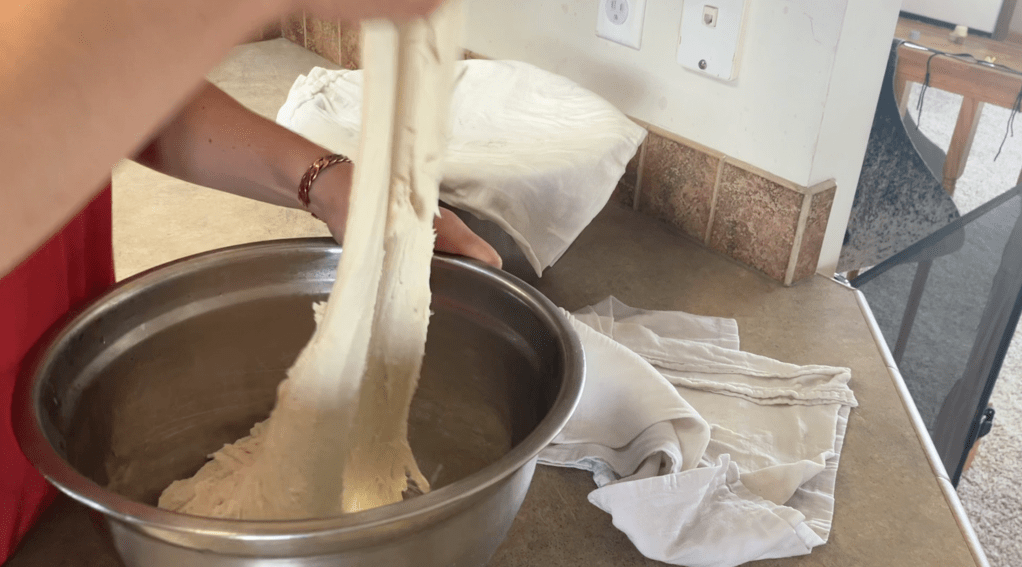
Gluten is the protein network that gives dough its stretch and structure. You develop it through mixing, folding, or kneading, making your bread chewy and well-formed. My favorite method for gluten development is performing stretch and folds!
Stretch and Fold
During bulk fermentation, you gently stretch the dough and fold it over itself a few times. It’s a low-effort way to build gluten and strengthen the dough without kneading. This is a great technique if you are not using a mixer, or you don’t want to overwork your mixer. I use this method every time I make sourdough!
Bulk Ferment/Bulk Rise
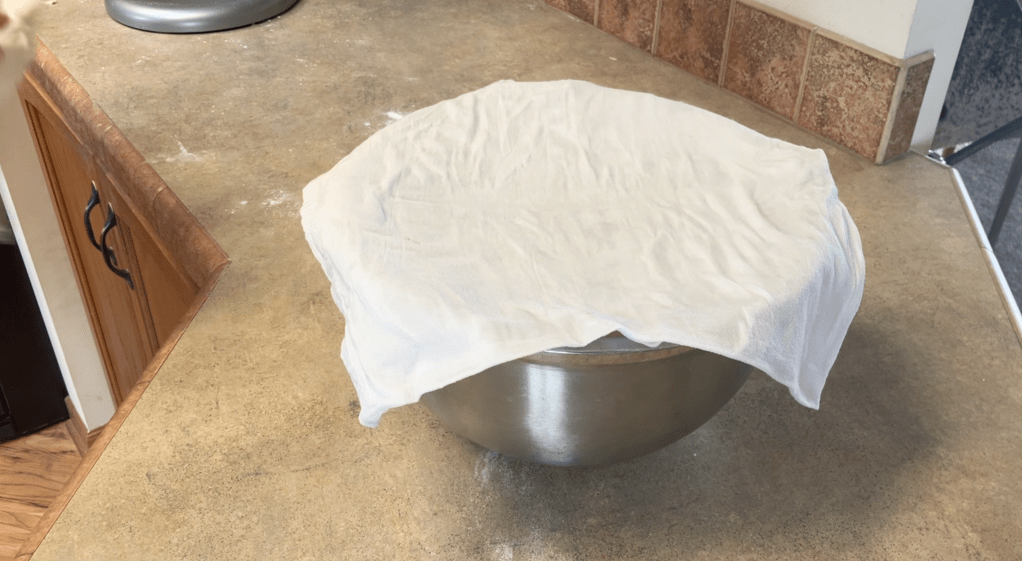
After mixing your dough, this is the first big rise where the magic happens. The dough ferments, develops flavor, and builds structure. This step takes several hours but will depend on the temperature of your kitchen. I like to do my bulk rise overnight because it takes between 10-12 hours in my kitchen.
Fermentation Window
This is the sweet spot during bulk fermentation when your dough is perfectly risen—not too little, not too much. You’ll know it by the dough’s volume and bubbly texture. The amount of time it takes to reach the fermentation window will vary depending on your kitchen and recipe, but it often takes several hours sometimes even overnight!
Proof
This is the final rise of your shaped dough in the loaf form before it is baked in the oven. It’s when the dough puffs up, getting light and airy, ready to become a beautiful loaf. This is often done in the fridge (at least for part of the time) with sourdough. This helps the score to be nice and smooth without jagged edges.

Window Pane Test
If you are trying to decide if your dough is ready to shape into loaves, gently stretch a small piece. If it forms a thin, see-through membrane (like a window pane) without tearing, your gluten is well-developed, and you’re good to go!
Lamination
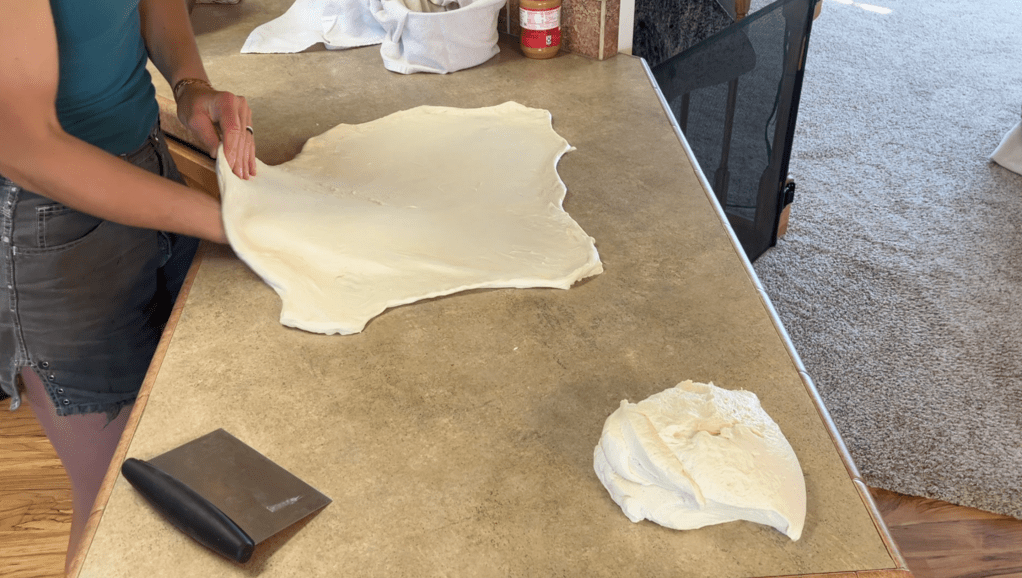
This sounds fancy, but it’s just spreading your dough into a thin rectangle, folding it like a letter, and repeating. It helps build structure and layers, especially in high-hydration doughs.
Hydration
This is the percentage of water relative to flour in your dough. A 70% hydration dough has 70 grams of water for every 100 grams of flour. Higher hydration means wetter, stickier dough and often a more open crumb.
Crumb
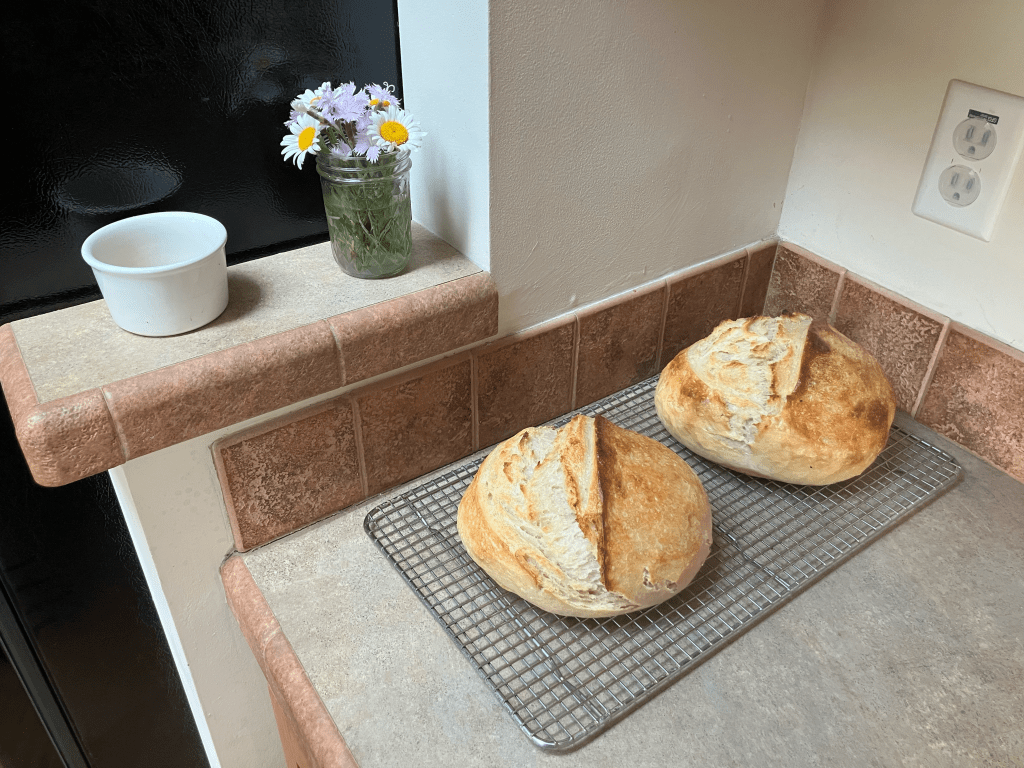
The crumb is the inside of your bread—the texture you see when you slice it. It can be airy with big holes or tight and uniform, depending on the bread type. For artisan sourdough loaves, it is often desirable to have airy loaves with large holes or an open crumb. A closed crumb is dense and uniform, perfect for sandwiches. Both are great, just different.
Shaping
Shaping is forming your dough into its final form, like a boule. It creates tension on the surface for a nice rise and structure.

Scoring
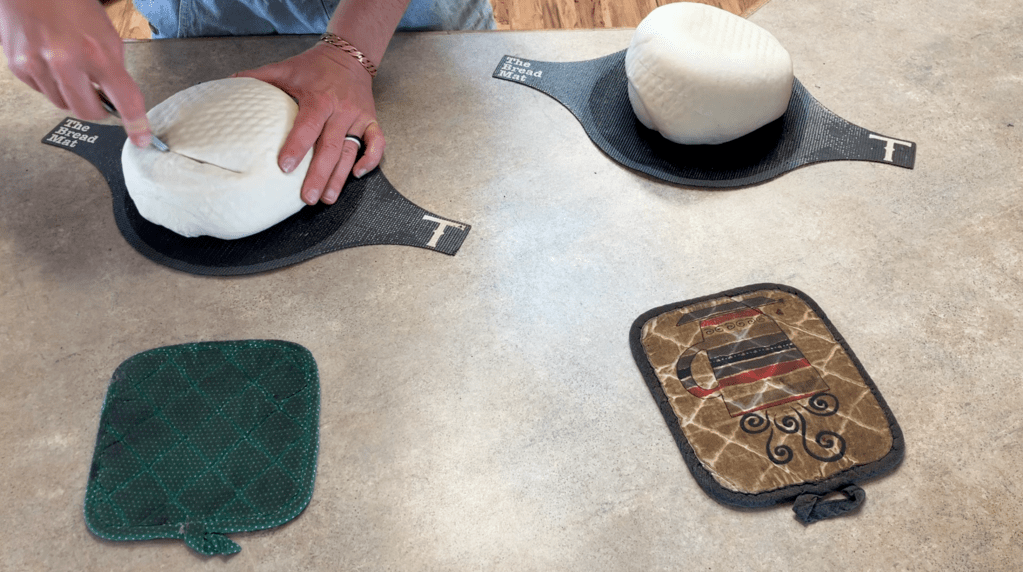
Before baking, you cut the dough’s surface with a sharp blade, often times a bread lame. This controls where the bread expands in the oven and can creates gorgeous patterns on artisan loaves. However, you don’t have to start off doing pretty patterns on your dough. A simple cut or two will work just fine and is my go to option when I don’t have time for an intricate design!
Bread Lame
A bread lame (pronounced “lahm”) is a fancy name for a razor blade used for scoring dough. It gives you precision for those Instagram-worthy cuts. I have a Gerber dedicated to scoring bread, but there are lots of gorgeous bread lames out there you can buy as well. If you are on a budget and don’t want to spend the money on a bread lame, a smaller, very sharp knife can also work, it just doesn’t give the same precision for fancy designs.
Banneton/Proofing Basket
These are baskets (often wicker or cane) that hold your dough during proofing. They support the dough’s shape and leave pretty spiral patterns on your loaf. High quality bannetons can be expensive, so if you are looking for a budget option use bowls you already have and a tea towel (or something similar).
Oven Spring
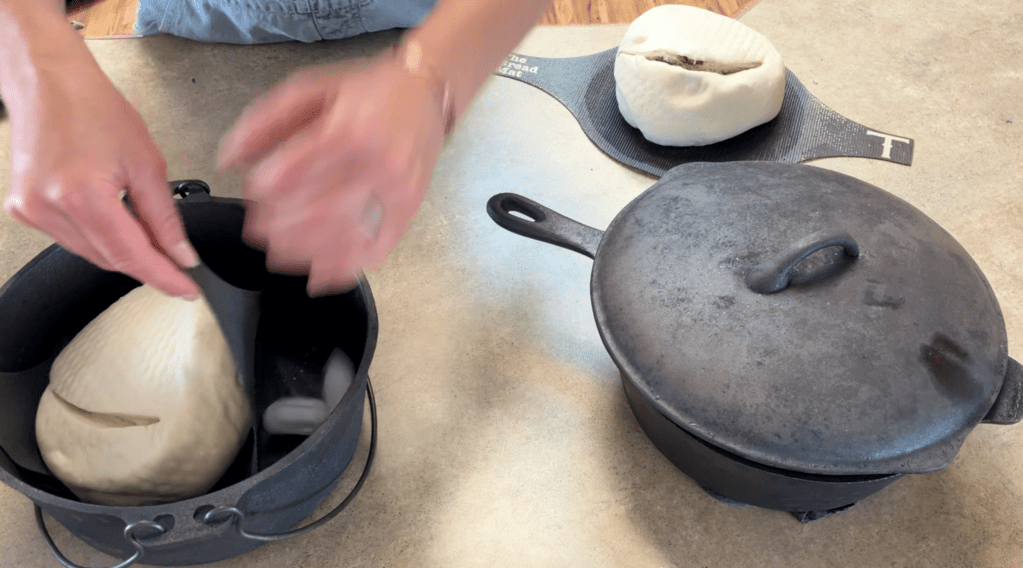
This is when your dough puffs up in the hot oven, thanks to steam and heat. Good oven spring means a tall, airy loaf. To help get a good oven spring, score your loaf deeply and add a couple of ice cubes to each Dutch oven before adding your loaves.
Boule
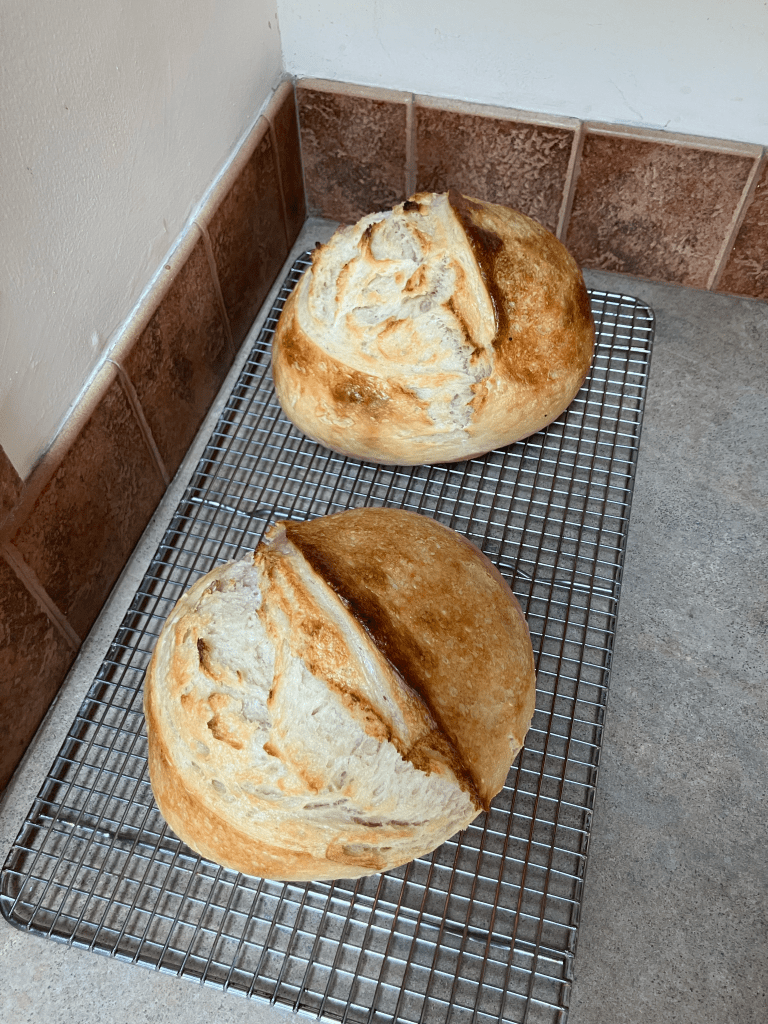
A boule (French for “ball”) is a round loaf, shaped like a slightly flattened sphere. It’s a classic sourdough shape, perfect for beginners.
Inclusions
These are the fun add-ins you mix into your dough, like nuts, seeds, dried fruit, or cheese. They add flavor and texture to your bread. Some of my favorite inclusions are jalapeno cheddar and cinnamon with or without raisins.
Cold Ferment
Placing your dough in the fridge for a slow fermentation is called cold fermenting. It deepens flavor and makes the dough easier to handle. A cold ferment can often be used to make a dough ahead of time and is very common in pizza doughs.
Over/Under Proofing
Over-proofing happens when your dough rises too long, losing structure and becoming flat or gummy. When this happens, the loaf is not a loss! It can be turned into focaccia bread or baked and made into croutons. Under-proofing is when it hasn’t risen enough, making a dense, heavy loaf. Timing is key!
Many of the terms used in sourdough recipes and online can seem overwhelming and daunting when you are first starting out. However, many of the terms just sound fancy!
When I started, I was overwhelmed by words like “levain” and “autolyze,” but once you understand them, it’s like learning the steps to a new dance. Each term is just a small part of the process, and with practice, they’ll feel as natural as slicing into a warm loaf.
Are there other baking terms you’ve come across that sound like a foreign language? Drop them in the comments below, and I’ll break them down in a future post. Or, let me know which of these definitions clicked for you the most—I’m curious to hear what helped you the most on your sourdough journey! Happy baking, friend!

 Cora's Cottage
Leave a comment