
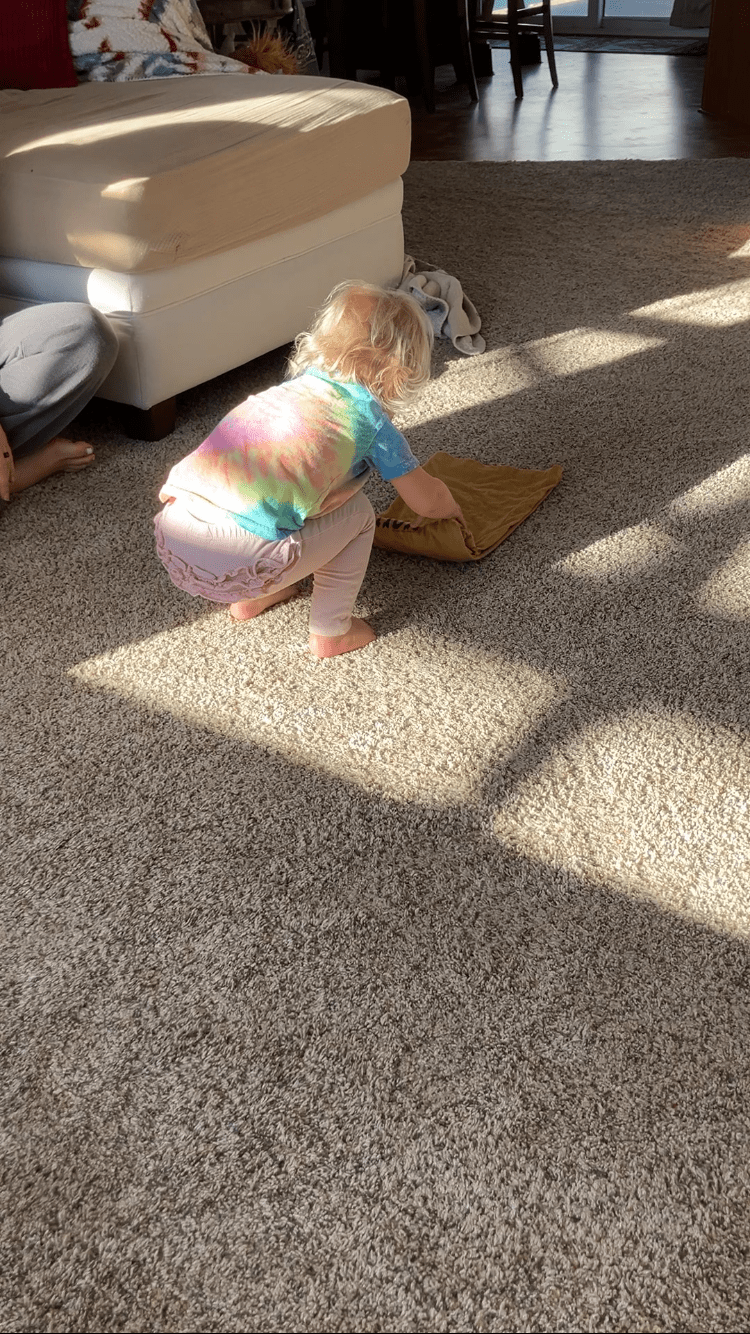
As parents, we all know that magical (and sometimes chaotic) phase when toddlers suddenly want to “help” with everything. That tiny hand reaching for the broom or the eager face peering into the dishwasher—it’s equal parts heartwarming and humbling. At around 12 to 18 months, our little ones are bursting with curiosity and a fierce desire to mimic us, but their motor skills and attention spans are still developing. The key? Adjusting our expectations and embracing the messier, slower version of tasks. What might take you five minutes could stretch to 15 with their involvement, but oh, the rewards! Not only does it foster a sense of accomplishment in them, but it also lays the groundwork for lifelong habits of responsibility and confidence.
Our own journey with this started when our daughter, just turning one, began toddling after me with a determined grin, clutching a toy as if it were her mission in life. We didn’t force it; we invited her in. What began as me guiding her chubby fingers to drop blocks into a bin evolved into full-blown routines she now anticipates with glee. She’s not quite two yet, and already, she insists on claiming “her jobs” like sorting silverware or wiping up spills. Sure, there were frustrating days early on when the extra time felt endless, but seasoned moms in my circle pulled me aside with knowing smiles. “Cherish this,” they said. “Savor the unprompted eagerness before the eye-rolls set in during the tween years. It’s building capable kids who feel seen and valued.”
And they were right. Involving toddlers in household chores isn’t about perfection—it’s about participation. It teaches them cause and effect, boosts fine and gross motor skills, and even sneaks in early lessons on sorting, matching, and sequencing. Plus, in our busy world, it’s a win-win: they learn, and you get a mini sous-chef (or laundry assistant) without the battles later on. If you’re ready to turn “I do it!” into “I helped!”, let’s dive into practical, toddler-friendly chores that fit seamlessly into your daily rhythm. These ideas are drawn from our trial-and-error adventures, scaled to what a 1- to 2-year-old can realistically handle with your gentle guidance.
Starting Simple: The Power of Toy Pickup Routines
One of the easiest entry points—and honestly, a daily necessity—is picking up toys. Around our daughter’s first birthday, she had the coordination to waddle while gripping a single block or stuffed animal, so we turned cleanup into a game. We’d kneel side by side, me modeling by tossing a toy into the bin with exaggerated enthusiasm (“Whee! Home it goes!”), and she’d follow suit, beaming at her tiny triumph.
Fast forward to now, and a simple cue like “Time to tidy toys!” sends her scurrying to gather her playthings. We built consistency by linking it to natural transitions: before lunch (so we can eat without Legos underfoot), pre-nap (for that cozy wind-down vibe), and bedtime (easing into storytime). It’s not flawless—she might detour to “hide” a doll under the couch for giggles—but 80% independent effort from a not-yet-two-year-old? That’s progress worth celebrating.
Pro tip: Keep bins low and labeled with pictures (a toy truck icon for vehicles, say) to encourage sorting without overwhelming her. Over time, this chore sharpens focus and instills pride in a clutter-free space. And on those proactive days when she spots me prepping lunch and starts tidying unprompted? Pure parenting gold. It’s moments like these that remind me: routines aren’t just for order; they’re for connection.
Spill Patrol: Mastering the Art of Wiping Counters and Messes
Toddlers and messes go hand in hand like peanut butter and jelly—inevitable and a little sticky. But what if we flipped the script? When our daughter caught me swiping a rag across the kitchen island after her yogurt “art project,” her eyes lit up with that classic “Me too!” spark. From there, wiping counters became her domain.
I stash a dedicated, kid-sized washcloth in a low drawer, dampened just enough to tackle crumbs or splatters without turning the floor into a slip-n-slide. She grabs it independently now, toddling over to zap a milk dribble or crayon smudge on the coffee table. It’s not surgical precision—streaks are part of the package—but it teaches cause (spill happens) and effect (wipe it up), plus basic hygiene in a fun, empowering way.
Extend this to art time aftermaths or post-snack zones, and you’ve got a built-in motivator for tidiness. The beauty? It’s flexible—no set schedule needed. She’ll often initiate it herself, which cuts down on my mental load. For other parents dipping their toes in, start with dry cloths for safety, then graduate to slightly damp ones. Watch her confidence bloom as she transforms from chaos creator to cleanup captain.
Eco-Warriors in Training: Sorting Trash and Recycling
Nothing says “I’m a big kid” like tossing a banana peel with purpose. This chore snuck into our routine effortlessly—our daughter shadowed us to the bins, arms outstretched for our “gifts” of wrappers or bottles. A quick “Trash, please!” or “Recycling bin!” and off she’d go, plopping items into the right spots with toddler triumph.
At her age, it’s less about perfection and more about the joy of contribution—crumpled paper in the wrong bin? No biggie; we cheer the effort and gently redirect next time. This one’s a stealth educator, too: it introduces environmental awareness early, like why that plastic bottle gets a second life instead of the landfill.
Make it a habit by involving her post-meal or during unboxing new toys. The repetition reinforces sorting skills that spill over into other areas, like matching socks later. And let’s be real: fewer items cluttering your counters? That’s a quiet victory for all.
Laundry Lineup: From Hamper to Hanger
Laundry might feel like a never ending task for adults, but for toddlers, it’s a treasure hunt of textures and triumphs. Once toy pickup clicked, we pivoted to clothes: she’d lug her jammies to the hamper, a soft plop echoing her growing autonomy. Now, her room hamper is her kingdom—pajama pants and tiny socks land there with minimal nudges.
We expanded to family towels: tea cloths from the kitchen or bath washcloths get ferried to the laundry room hamper. It’s a natural sorter—fabrics she knows by feel—and keeps her engaged during my folding sessions. In warmer months, line-drying amps up the fun: she hands me pins or clothes, her little fingers fumbling but determined, saving me bends and stretches across loads.
Safety first: supervise near appliances, and start with dry, light items. The payoff? She’s learning categorization (dirty vs. clean) and sequencing (sort, wash, dry, put away), all while feeling like a vital team member.
Bedtime Baskets: Organizing Sleepy-Time Essentials
Mornings and nap transitions can be whirlwinds, but enlisting your toddler in stowing sleep gear smooths the edges. Our setup is blissfully simple: a low basket for her lovey, blanket, and PJs, right at knee height. Post-wake-up, she deposits them without too much prompting.
Stuffed animals get their own living room nook—a fabric bin she raids for play and restores with pride. It’s an extension of toy cleanup but themed around rest, reinforcing boundaries between play and sleep. No more loveys lost under couch cushions; everything has a “home,” and she loves naming it.
Dishwasher Duty: Safe Silverware Sorting Shenanigans
Ah, the dishwasher fascination—universal toddler lore. Sharp utensils and fragile plates? A hazard waiting to happen. Solution: assign her the silverware slot. When unloading, I hand her fistfuls of safe spoons and forks; she shuttles them to the drawer, dumping with glee.
Sorting’s her jam—forks in one slot, spoons in another—though orientation? Let’s just say it’s “artistic.” Early on, my inner neat-freak recoiled, but perfection’s the enemy here. As long as it’s contained, it counts. This keeps her occupied (and safe) while I handle the rest, turning potential tantrum time into teamwork.
Branch out to plastic kids’ dishes once she’s steady. It’s a fine-motor workout disguised as play, building patterns she’ll use in puzzles or school later.
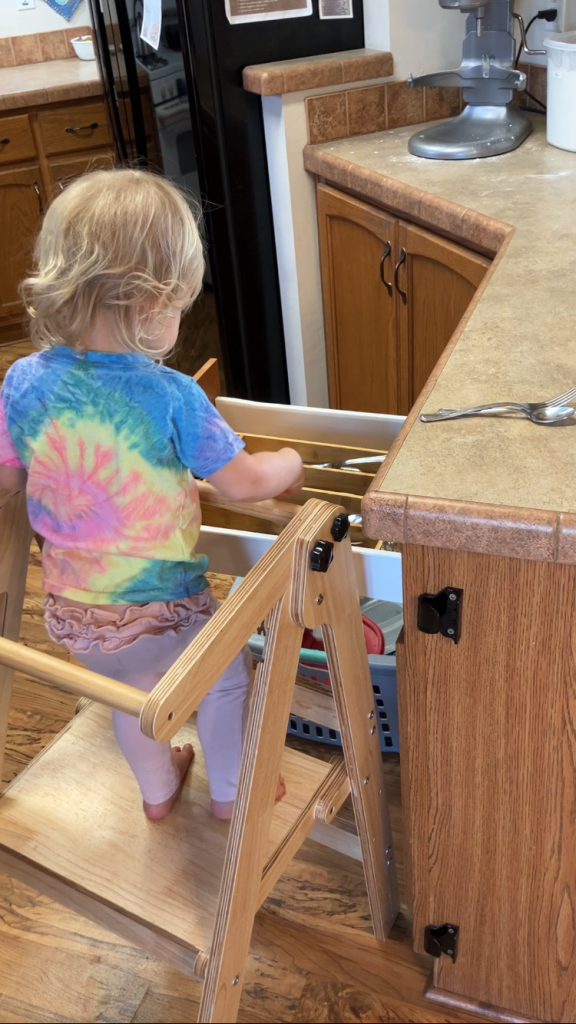
Mealtime Magic: Setting the Table Toddler-Style
Dinner prep’s frenzy? Harness that energy for table-setting. We dedicated a low cabinet to her gear: unbreakable plates, sippy cups, and toddler forks. A nod toward her highchair, and she’s on it—clattering items to her spot like a pro waiter.
For family meals, she ferries one piece at a time: “Plate to Daddy!” It occupies her while I finish up, and the praise? Lavish. “You set the table so nicely—what a helper!” This nurtures social skills (sharing space) and routine (meals as events).
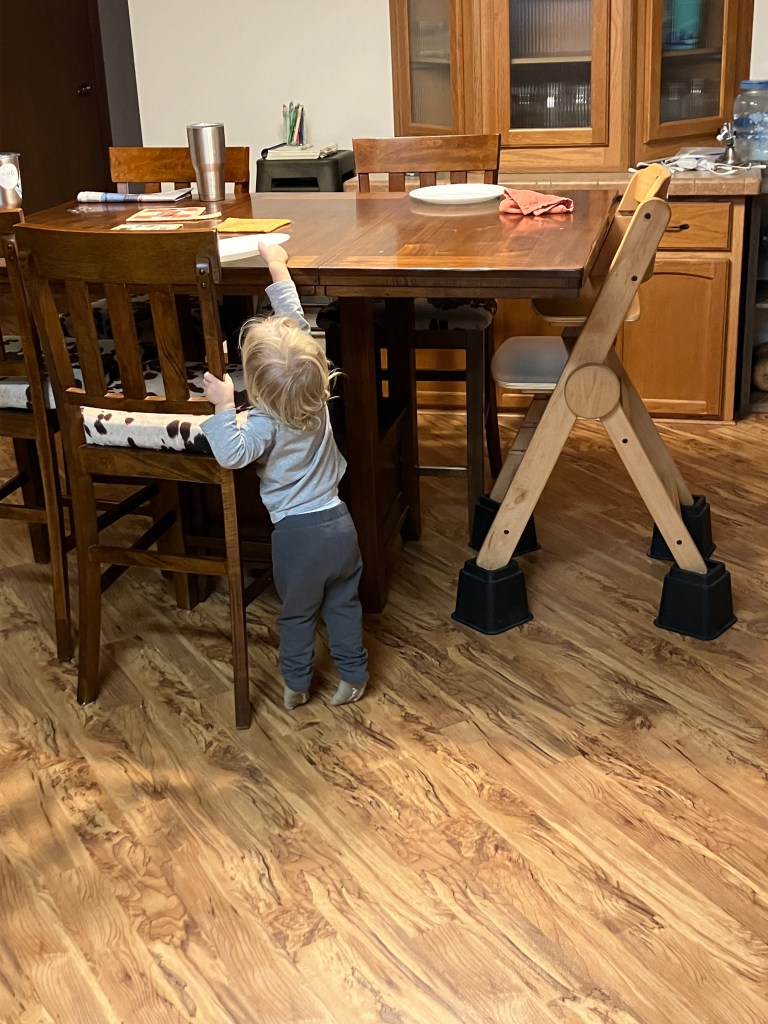
Laundry Load Lifesavers: Dryer Duty and Line Assistance
Laundry days were solo slogs until she joined the fray. From the dryer, she transfers warm fluff to a basket—socks flying like confetti. Loading’s next: I sort, she tosses in, giggling at the thuds.
Outdoors, line-drying in the summer is a sensory fiesta. She helps hand me pins or clothes or helps shuttle dry laundry to the basket and pick up dropped pins.
It’s gross-motor heaven—bending, carrying, reaching—and teaches patience (waiting for the clothes to dry).
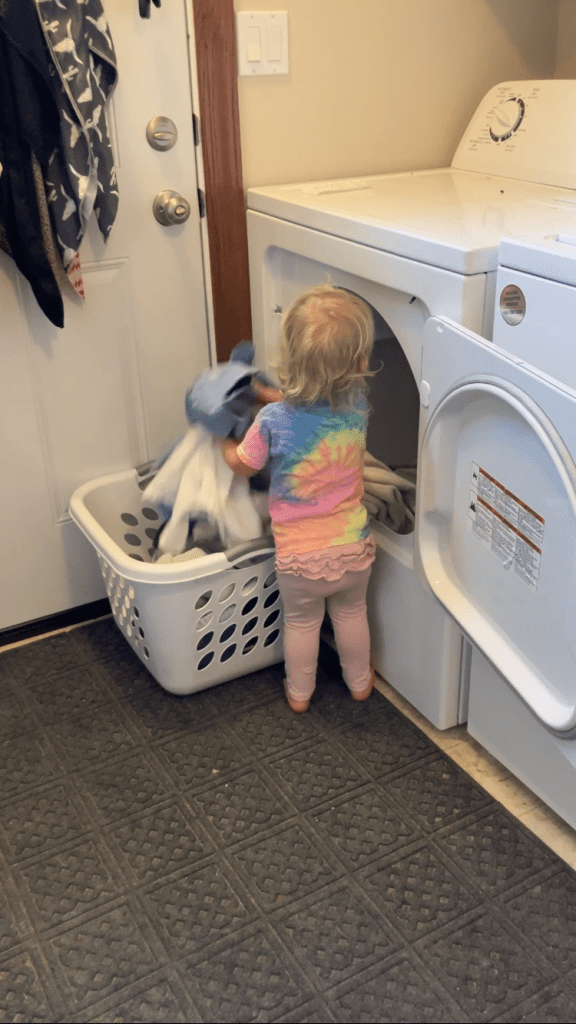
Fold and Ferry: Introducing Laundry Folding Fun
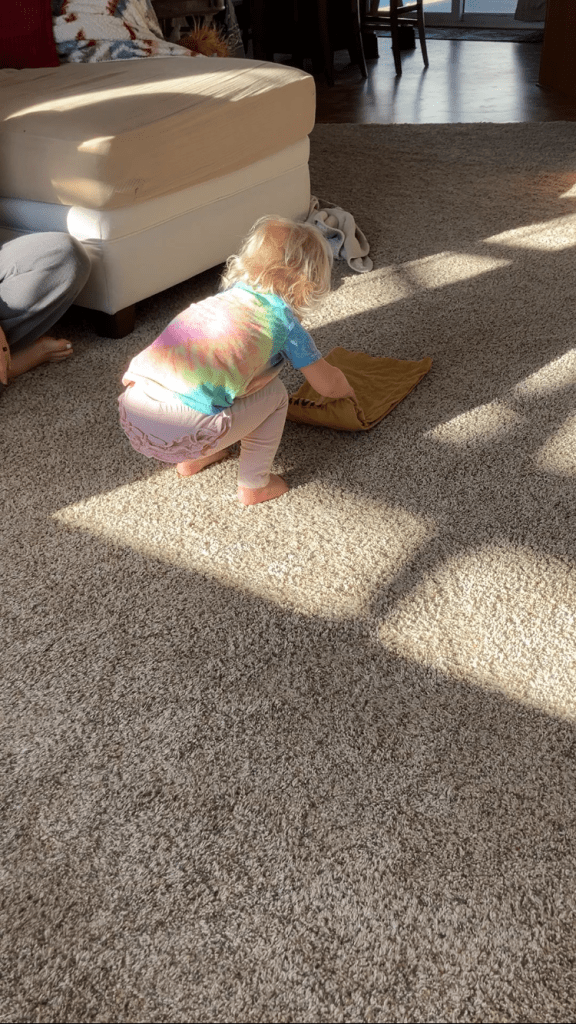
Folding’s the new frontier, introduced around 18 months when her “help” evolved from patting piles to attempting rolls. We start small: washcloths squared (ish) or tees bundled like burritos. Hers aren’t drawer-ready yet—more like enthusiastic wads—but they stack, and that’s victory.
To build buy-in, we “sort” by color or type first, then fold together on the bed. Post-fold, she hauls mini-piles to drawers—socks to hers, towels to the linen closet—dropping a few items along the way sparks zero fuss. If they tumble, we laugh and retry; the goal’s grit, not geometry.
This chore hones dexterity and decision-making (which drawer?). Patience is key—expect 10 minutes for her five items—but the independence glow? Priceless.
Outdoor Allies: Pet Feeding and Watering Adventures
Our outdoor crew (two dogs and a few cats) inspired seasonal chores, but they’re adaptable indoors too. Warm days mean scooping kibble—dump from measure to bowl. Watering is a hose-hold or bucket-fill assist, splashing included.
It’s responsibility with heart—caring for others—and coordinates hand-eye skills. Tie it to gratitude chats: “What sound do full tummies make?” It weaves empathy into errands.
Why These Chores Matter: Long-Term Wins for Your Family
Whew— that’s a lineup, right? From toy bins to towel folds, these toddler chores aren’t just checkmarks; they’re investments. Research backs it: kids who pitch in early develop stronger executive function, better emotional regulation, and even higher self-esteem. In our home, it’s shifted dynamics—less “me vs. mess,” more “us against the world.”
But let’s address the elephant: the time suck. Yes, it slows you down initially, but batch similar tasks (laundry cluster) or use timers for fun urgency. And the cleanup? Embrace imperfect; it’ll evolve. Celebrate wins with high-fives or stickers to keep the spark alive.
Invite the Chaos, Reap the Joy
As our daughter’s repertoire grows, so does my awe at her budding capability. That frustration from slower paces? It’s faded into fondness for these shared slices of time where she is learning new skills and growing in her capabilities. If you’re on the fence, pick one chore—maybe toy pickup tomorrow—and lean in.
What’s your go-to starter chore? Drop it in the comments—I’d love to swap stories and tweaks. Here’s to messy, meaningful helping hands in homes everywhere.
 Cora's Cottage
Leave a comment