
If you want to build a from-scratch pantry, common advice you might hear is to buy things in bulk. While this is good advice, it can raise the question about where to store your bulk goods especially when space is limited.
There are lots of creative ways to store dry goods, but there are fewer viable options for things such as bulk meat, cheese, and other perishable items. Canned goods can be easier to store, but do store better (especially home canned) in the correct climate. They also can be quite heavy and require good, sturdy shelving.
Bulk Storage for Meat
Bulk storage for meat can be tricky because the vast majority of it is going to need to be frozen. This is where a good organizational system for your freezer can be game changing.
While the system we use wasn’t initially my top choice, it has turned out to be a fantastic option that I’m glad we were forced into. Instead of being able to buy a large chest freezer, we had to buy small chest freezers to get them into our basement around a tight corner and down the stairs.
Because we have small chest freezers, each freezer is dedicated to a specific type of meat or food storage. One freezer stores our beef, one stores our pork, another stores additional pork and chicken, and our fourth and final freezer stores vegetables, cheese, butter, and various other odds and ends.
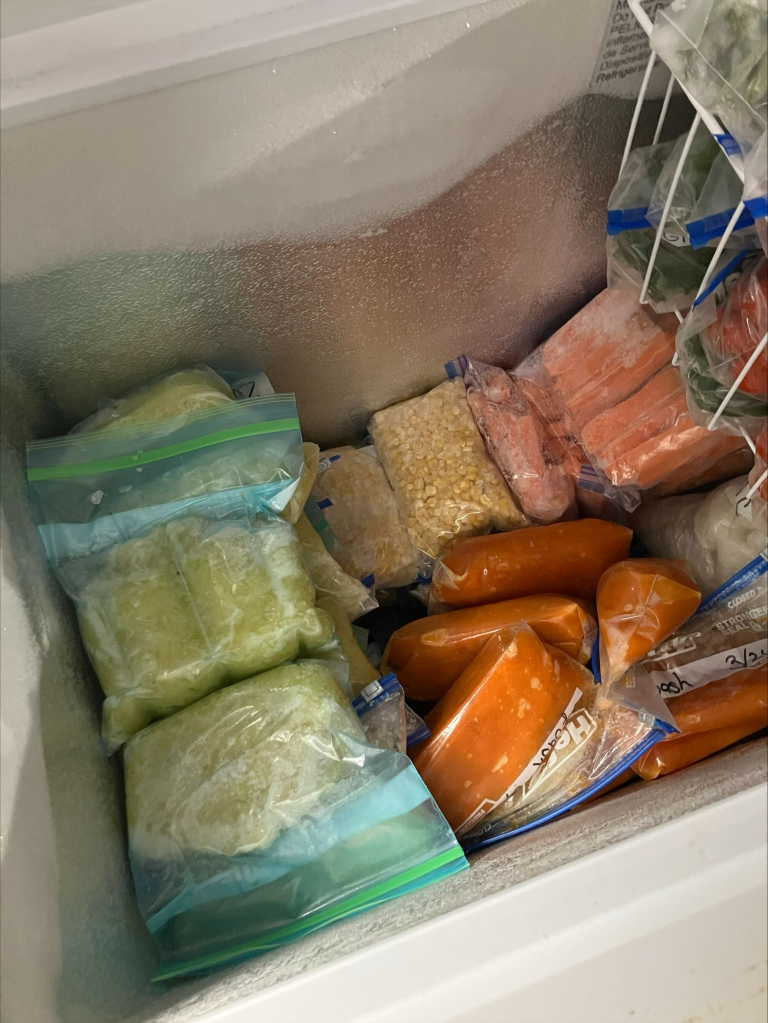
Inside each freezer, we have plastic milkcrates. These work well to separate different cuts of meat. For example, one milk crate stores steaks, another stores ground beef, another stores soup bones and roasts, etc.

To find milk crates on a budget, talk to your local restaurants and small grocery stores. Sometimes they get crates that they don’t have to return or put a deposit down on so they are willing to sell them to you cheap or even give them to you. If you can’t find crates that way, watch places like Facebook marketplace or many home improvement stores have similar crates you can purchase like these ones from Home Depot, Lowe’s, or Menards. It is best to use heavy duty crates like these because less sturdy crates can get brittle in the freezer.
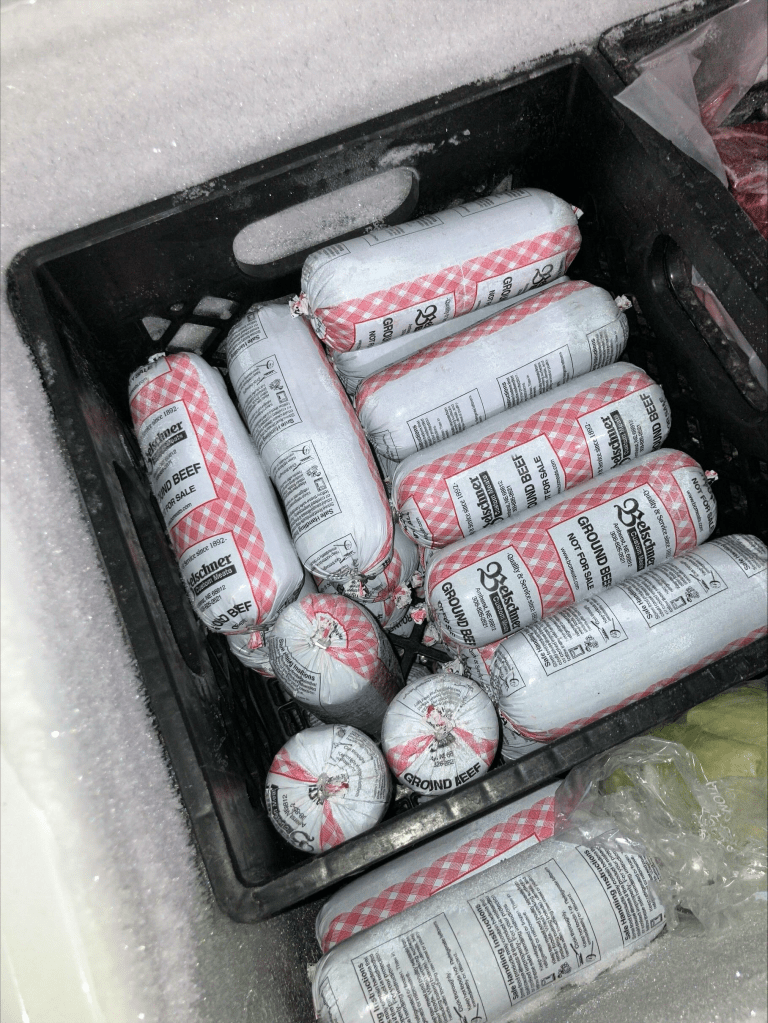
This method of using milk crates works much better than traditional freezer dividers. With traditional dividers, we would still have to dig and remove a lot of items in order to get to what we wanted at the bottom. With milk crates, we can simply lift out a milk crate to get to whatever is beneath it.
While the freezer space doesn’t measure out to be an exact fit for the milk crates and does leave small spaces where we can slide odds and ends, such as organ meats or packages of items that don’t fit inside of their milk crate, this method still saves us lots of time overall without losing too much (if any) space in our freezers.
Buying several freezers at once may not be feasible, but there’s no need to buy several overnight. Start with one and slowly work up over time if that’s what works for you and your family. That’s another benefit to small freezers. They’re cheaper than larger ones and allow you to spread the expense out over time.
Another benefit to small chest freezers is that if one goes bad, you aren’t losing all of your food. You’re just losing a portion of it. However, it’s still always good practice to check your freezers often to be sure they are still functioning well. This can be improved by regularly thawing them out to remove frost and ice buildup.
When it comes to using our freezer storage method practically, I get meat out from the freezers to thaw in the refrigerator 1-2 times per week. The freezer attached to our refrigerator in the kitchen has a small variety of frozen vegetables, a small tub of frozen blueberries that gets used often for breakfasts, and freezer meals in 9×13 pans. I use this freezer as my “quick grab” freezer and it gets restocked often from the larger freezers.
Canned Goods Storage
Storing canned goods, especially home-canned canned goods can be challenging. Shelving needs to be heavy enough that it can support the weight while also allowing for a clear view or labeling system so that you can know what you have on the shelves.
While cabinets can be a good option if you have lots of storage in your kitchen, in my experience there is never enough space for all the canned goods we have, especially in the fall after harvest has concluded.
This shelving unit that my husband built has been great for storing our canned goods. The shelves are sturdy enough to hold hundreds (literally) of mason jars full of canned goods and the chalk painted front brace is great for labeling what is on each shelf. We can easily see what each item is at a glance without having to pull out each jar.
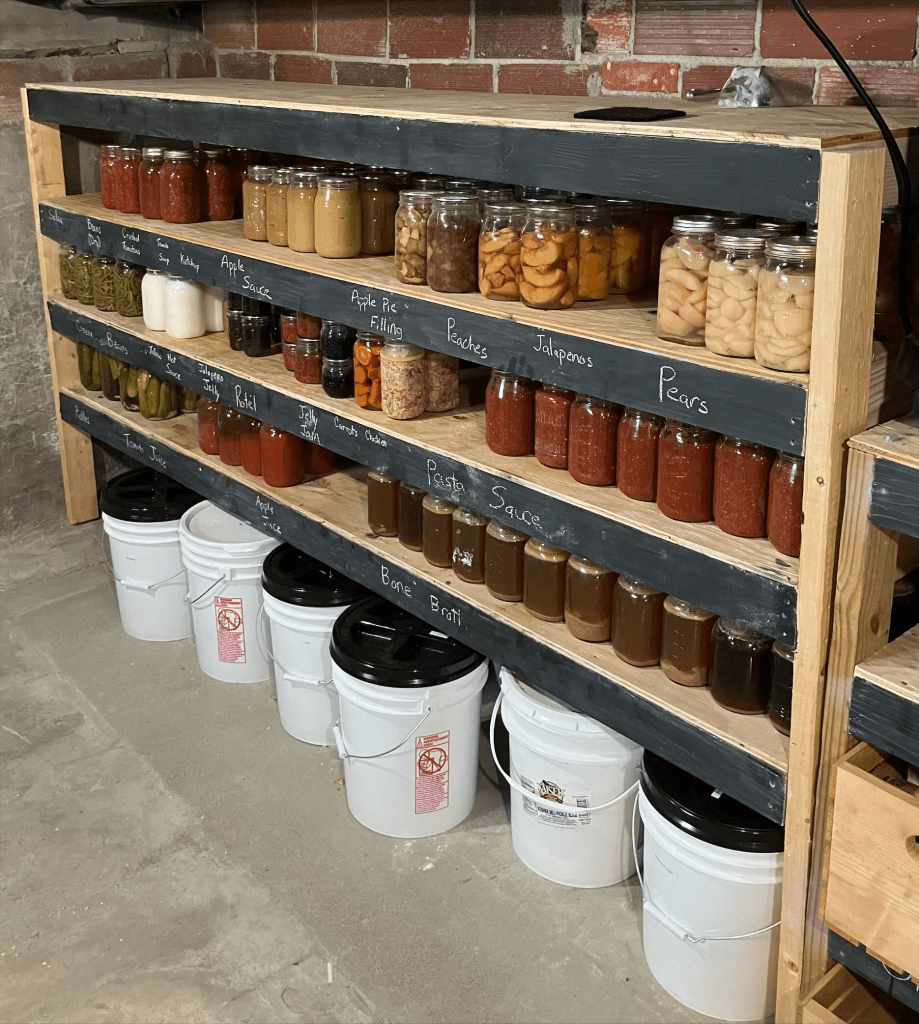
When choosing shelves for canned goods, particularly home-canned canned goods, it is important to make sure the shelves and unit as a whole are sturdy enough to hold the weight and that the shelves are level enough to hold jars.
Some wire shelving units might be sturdy enough to support the weight, but the wire shelves are not ideal for glass mason jars. This is because they can be uneven and allow the jars to tilt and tip against each other. Jenga with glass mason jars is never fun 😉
Other options for storing canned goods, even home canned goods, if space is limited is under beds. This may seem odd, but can greatly increase your food storage capacity. Long, short totes like those used for wrapping paper will allow you to utilize all the space, while making each of the jars accessible. If you are worried about seeing the jars under the bed, a simple bed skirt could hide that there is anything under the bed at all!
One creative option is to use a bookshelf for storing canned goods and allowing them to be displayed openly in the kitchen. With home canned goods, this can even add to the charm of your kitchen!
For our canned goods, I don’t keep any up in my kitchen. Our kitchen simple doesn’t have the space, but they are all easily accessible without too much fuss in the basement, so I can quickly run down and grab exactly what I need at a moments notice.
If I had more space in my kitchen, I might keep a few jars of common things I use like fruit, pasta sauce, and vegetables that I would restock weekly. Just because you have bulk storage space doesn’t mean everything has to be in it, but the opposite is also true. Just because you have kitchen cabinets doesn’t mean you have to keep canned goods in them if you need the space for kitchen tools or other things.
Dry Goods Storage
If you plan to store bulk dry goods, even for a shorter period of time (6-12 months), the best way is in food grade buckets with gamma seal lids. This allows you easy access to your bulk storage while keeping moisture and pests out.
Not only do buckets keep pests and moisture out, but buckets are easily moveable, making them ideal for restocking. (Both your small kitchen containers and the buckets when you get new bulk dry goods!)
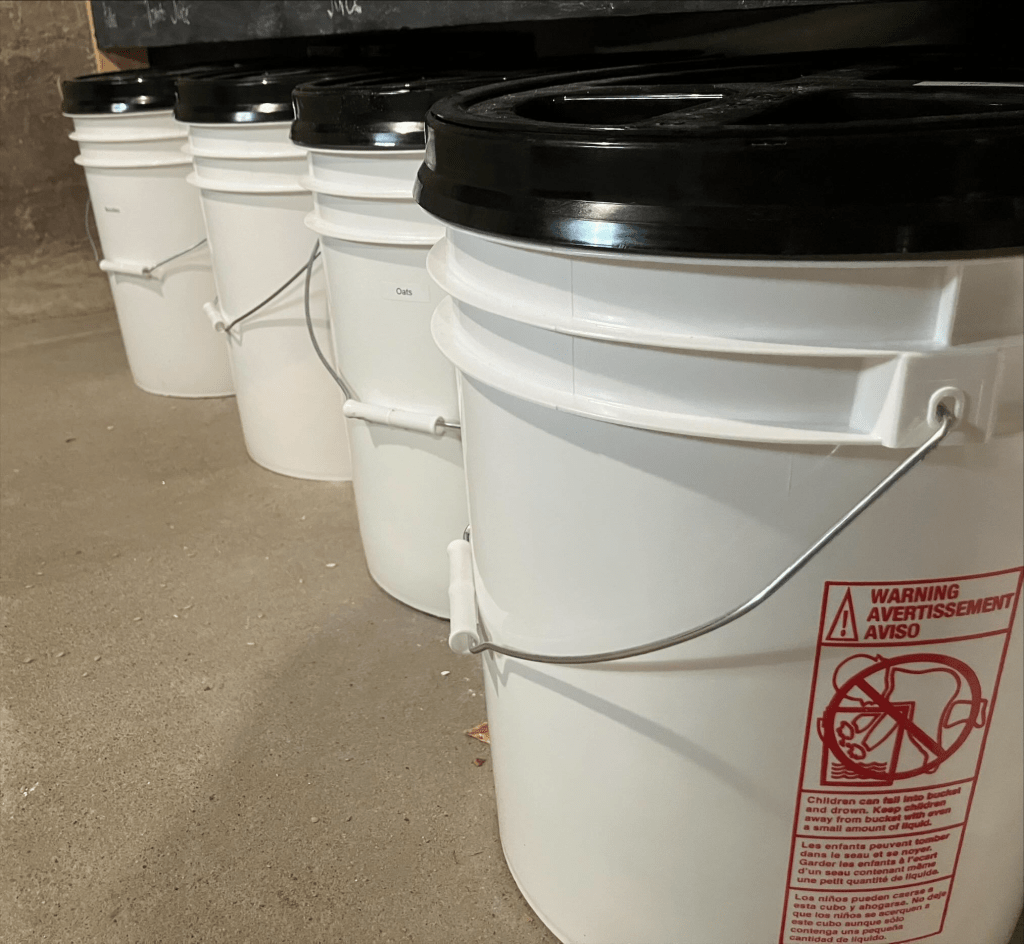
Buckets are also a winner for bulk dry good storage because they can be slid under shelves in a closet, stacked in the back of a closet, or lined up along a basement wall.
With dry goods, I find it easiest to use much smaller containers in my kitchen that are 1-2 gallons in size at most and refill them from my bulk 5 gallon storage. This keeps my kitchen from being crowded while allowing me to keep bulk goods on hand.
Keeping bulk goods or large quantities of ingredients on hand makes it much easier to cook from scratch because you don’t have to plan your meals around trips to the grocery store. With some practice, you can quickly whip up a meal from what you have without needing to make a run to the grocery store.
While this is far from an exhaustive list of ways to creatively store bulk food, these are some that I have found work well either currently or in the past. The key to storing bulk food, especially when space is limited, is to think outside the box and get creative. Just because a storage method isn’t traditional doesn’t mean it can’t be a great option for you and your family!
 Cora's Cottage
Leave a comment