
While recipes are great, it can be incredibly frustrating to find a recipe you think you’ll love only to realize you are missing one or two ingredient.
It’s happened more times than I care to admit that I have been stuck at dinner time, so I hop on Pinterest to find a recipe.
After some scrolling, I see one that stands out, so I click through to the recipe only to realize I am missing one or two ingredients. I don’t have time to go to the store, so that recipe is out.
Nothing is more frustrating at meal time than having a case of the missing ingredient.
Out of this exact frustration I started working on finding recipes that could be modified to fit what ingredients I had on hand rather than having to modify my pantry around a recipe.
Recipe frameworks give the general structure of a recipe but don’t require exact amounts or ingredients. This allows you to pick one or more ingredient from each category based on what you have available to you.
Skillet Framework Categories
- Meat/Protein
- Grain
- Base
- Vegetables
- Spices
While these are the five main categories, you can always add or subtract categories and ingredients as suits you and your family. That is the whole point of following a framework and not a recipe!
Meat/Protein
I always start my skillet with what protein I want to use or have available. Any type of meat will work; however the cooking method may very.

For example, if I am starting with raw hamburger, I start by browning the meat, but if I am starting with shredded chicken from a roast chicken, I simply add the chicken to the rest of the ingredients because it only needs to be heated and does not need to be cooked.
There are lots of meat or protein options:
- Hamburger
- Cubed Beef
- Shredded Chicken
- Cubed Chicken (Thigh or Breast)
- Venison (Ground or Cubed)
- Shredded Turkey
- Ground Turkey
- Sausage (Ground or Chopped Links)
- Bacon
- Tofu
Grain
This category has lots of options and is a bit of a misnomer because I include things like gnocchi and cubed potatoes but the place it holds in a finished dish is same.
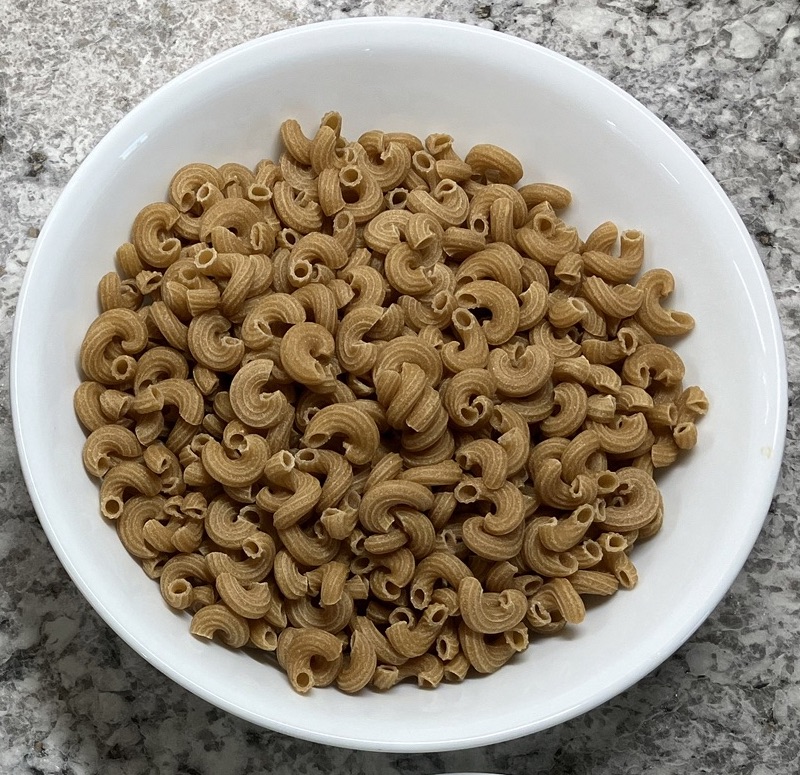
The general principles of cooking will remain the same as well but the time and amount of liquid will vary depending on the grain or grains you select for your skillet.
Grain options include:
- Noodles
- Rice (White, Brown, Wild, etc.)
- Quinoa (White, Red, Black, Tri-Color)
- Lentils (Black, Green, Red, Brown)
- Gnocchi (Potato, Cheese, Pumpkin, etc.)
- Potatoes (Diced, thinly sliced, etc)
When cooking the grain, I often need to add additional liquid to complete the cooking process, but I find that preferable over having to cook of lots of extra liquid or having a soupy skillet.
Base
This will be the start of a sauce and the flavor profile you want to highlight.
Looking for something hearty and thick? Try using broth.
Wanting to highlight Italian flavors? Start with tomato juice.
Looking for something more creamy? Try using milk!
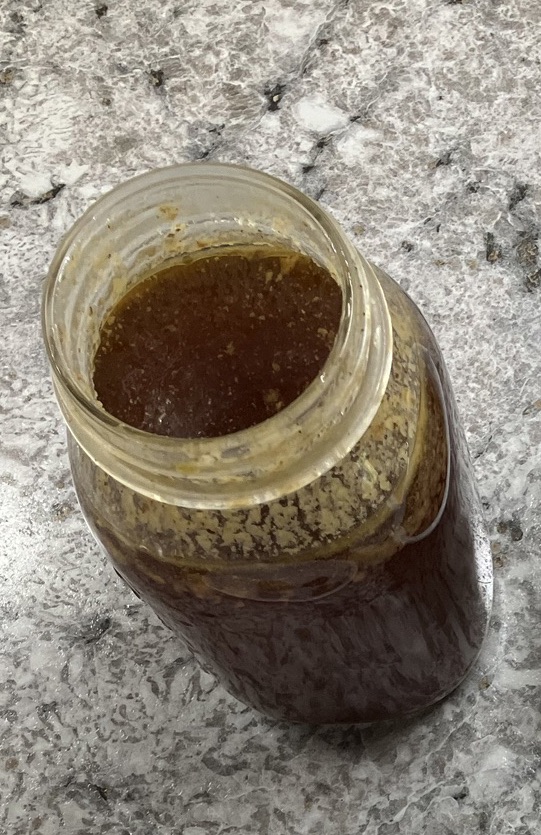
The point of the base is to add a liquid to cook the grain and prevent the ingredients from scorching or burning to the pan while providing the foundation for a sauce or gravy.
While you absolutely could use water, using a base like bone broth adds nutrients as well as flavor to the skillet.
Some of my favorite bases include:
- Broth (Chicken, Beef, Bone, Veggie, etc)
- Tomato Juice
- Milk
Vegetables
Adding vegetables to a skillet can be an excellent way to add extra nutrients to your diet and get vegetables in when you wouldn’t otherwise.
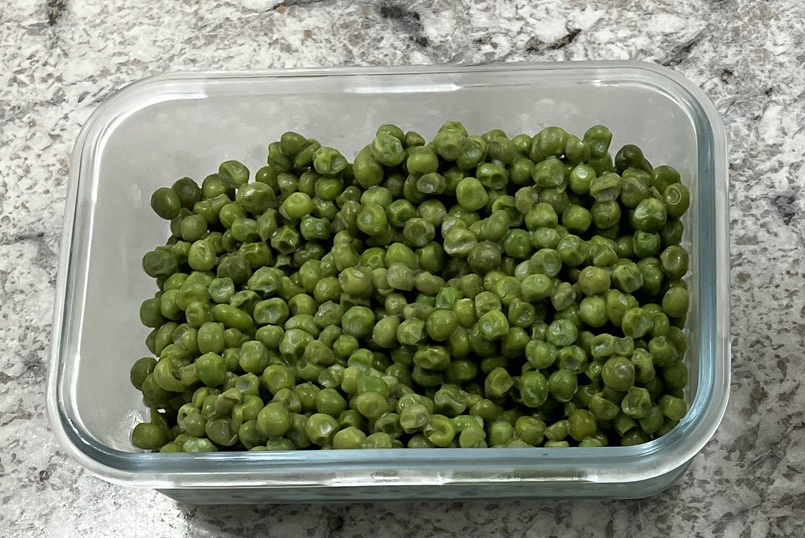
Not only can it elevate the dish’s nutrients but it can add some lovely color while using up those extra produce from the garden or back of the refrigerator.
The options are truly endless but here are some of my staples:
- Carrots
- Peas
- Corn
- Green beans
- Onion
- Zucchini
- Yellow Summer Squash
- Winter Squash/Pumpkin (Buttercup, Butternut, Acorn, etc)
- Okra
Fresh or leftover vegetables will both work, but fresh vegetables will likely need to cook longer to be soft than leftover vegetables that have already been cooked.
Spices
The spice options are abundant! This is the category that can really make a dish stand out.
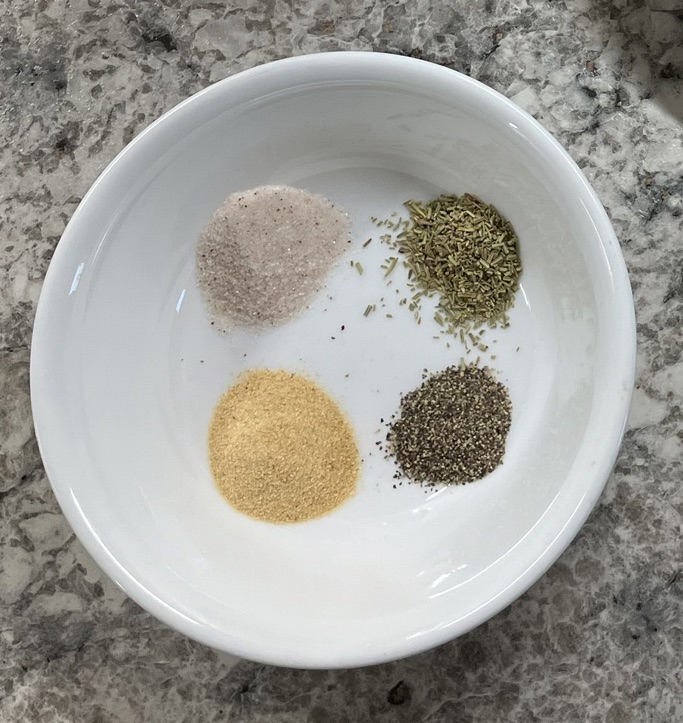
You can choose the same ingredients from the other categories but pick different spices and end up with an entirely different dish.
This is far from an exhaustive list, but here are some spices to choose from:
- Salt
- Pepper
- Onion Powder
- Garlic Powder
- Red Pepper Flakes
- Cayenne Pepper
- Ginger
- Cumin
- Turmeric
- Paprika
- Oregano
- Parsley
- Cilantro
- Rosemary
- Sage
- Basil
- Fennel Seeds
- Cinnamon
An Example Skillet
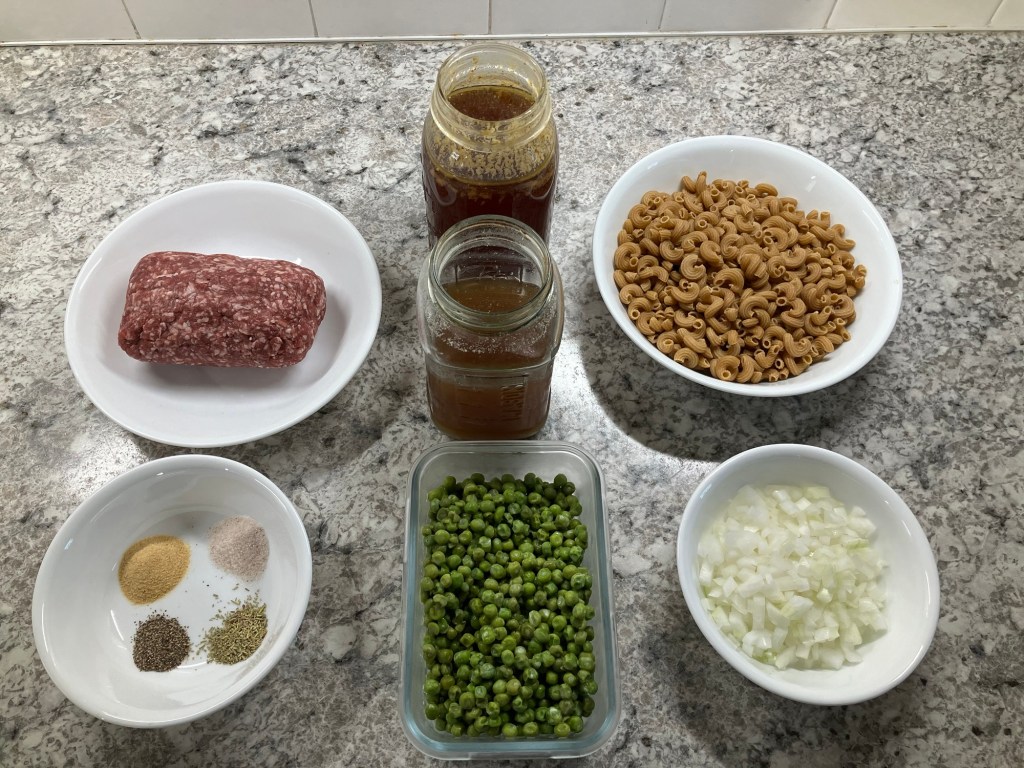
In the refrigerator I have 1 pound of ground beef, a partial jar of bone broth, and leftover peas.
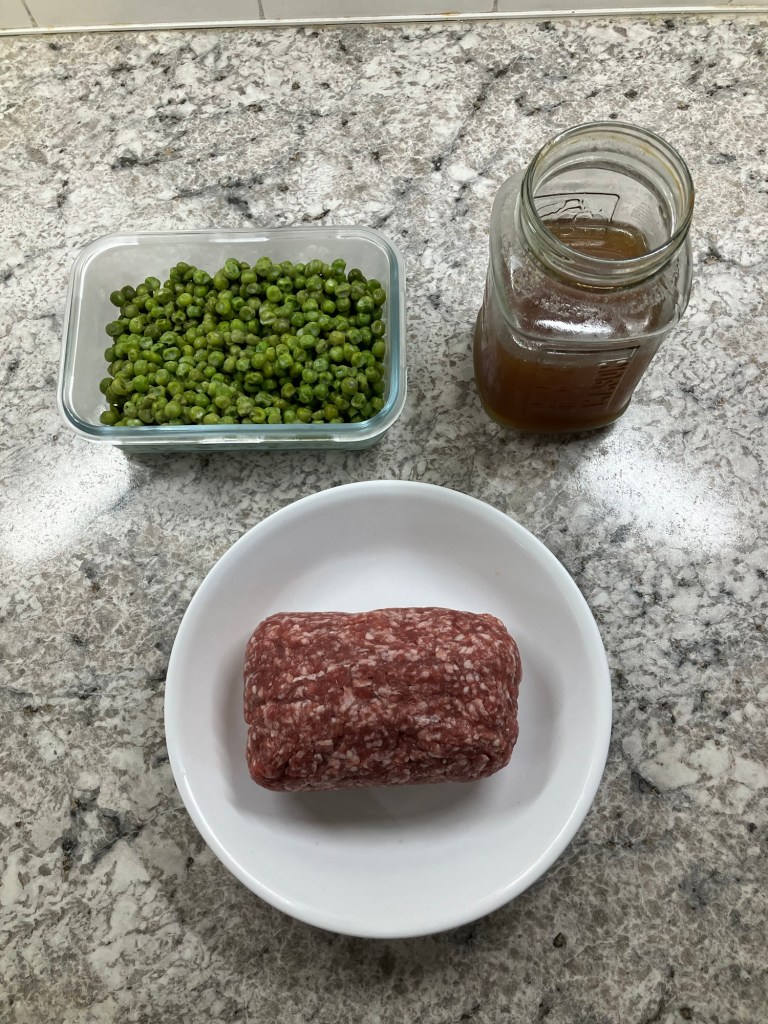
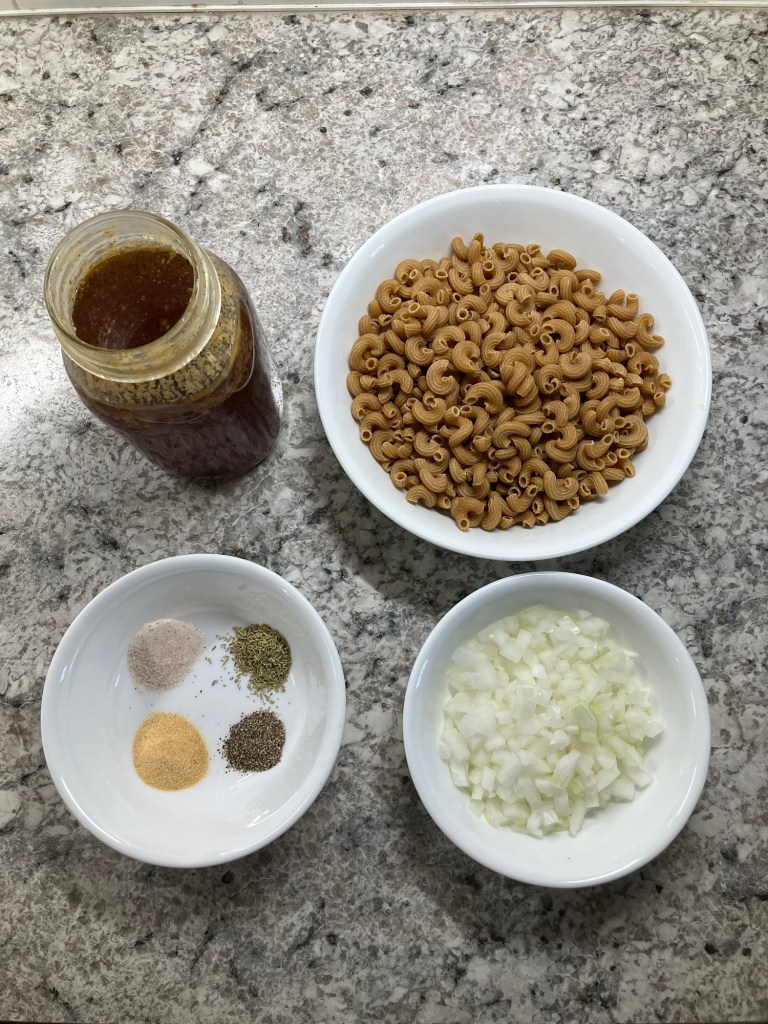
I’ll add noodles, more bone broth, onion, and spices from the pantry to make a brown gravy hamburger skillet with peas.
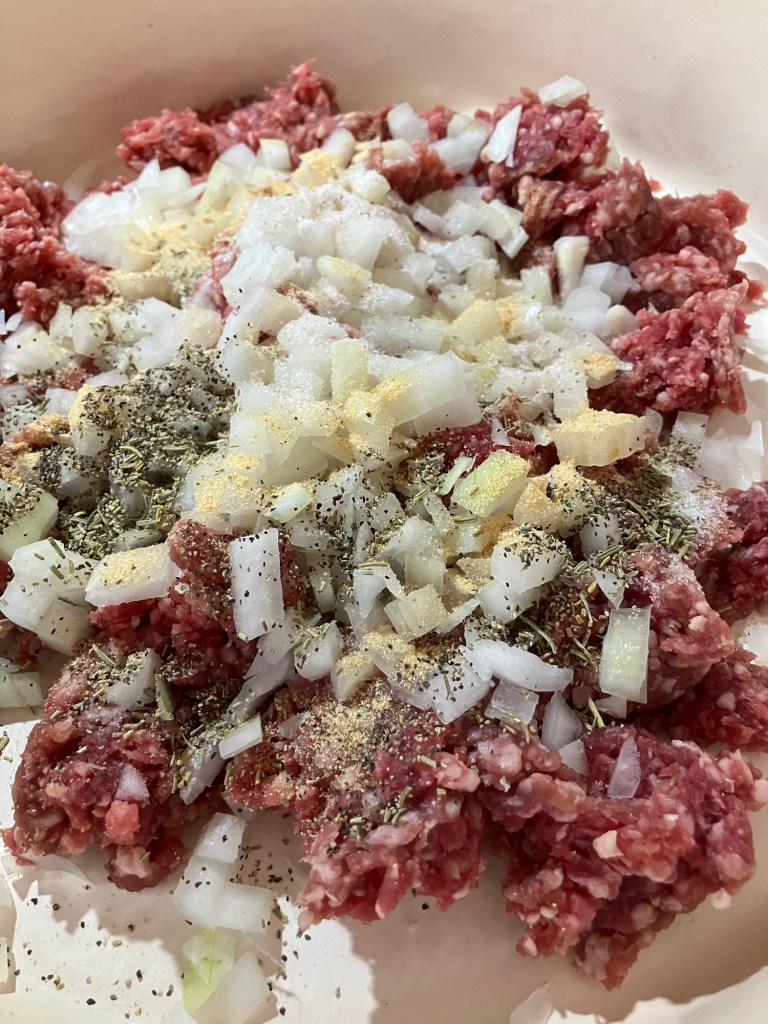
First, I’ll brown the ground beef with salt, pepper, garlic powder, rosemary, and diced onion.
When the ground beef is browned with no pink, I’ll add bone broth and noodles. As the noodles cook I will continue to add bone broth as needed while stirring to ensure that nothing sticks to the pan.
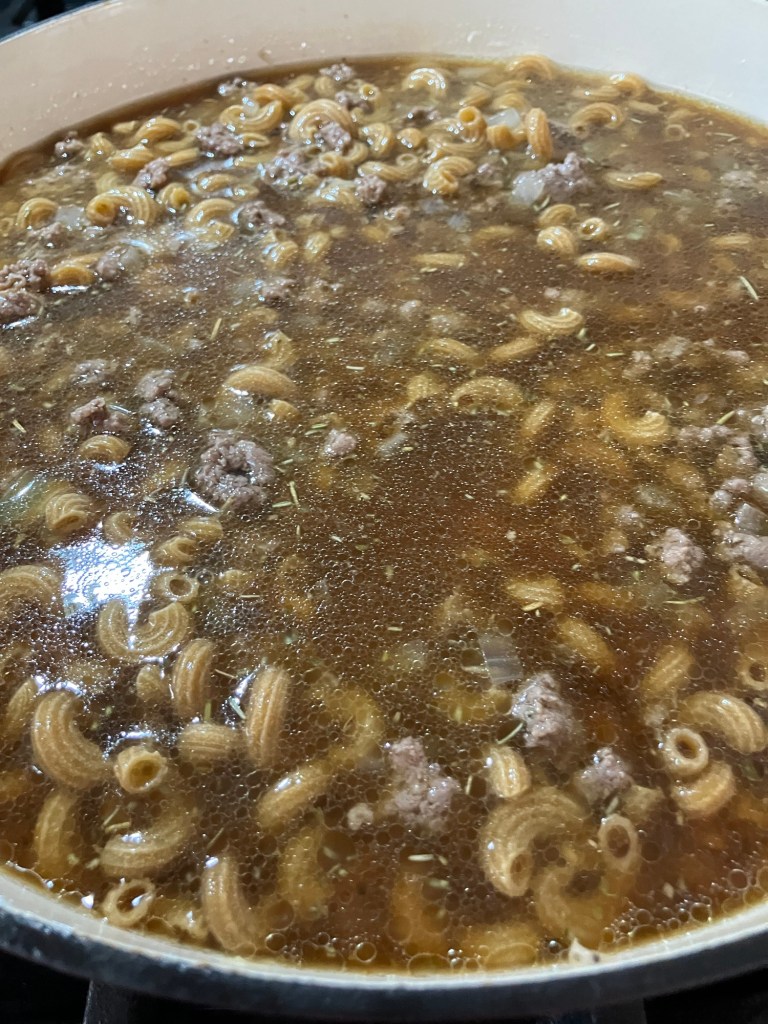
When the noodles are cooked, I will add the peas and cover for another 5 minutes to let them warm through before serving since they are already cooked.
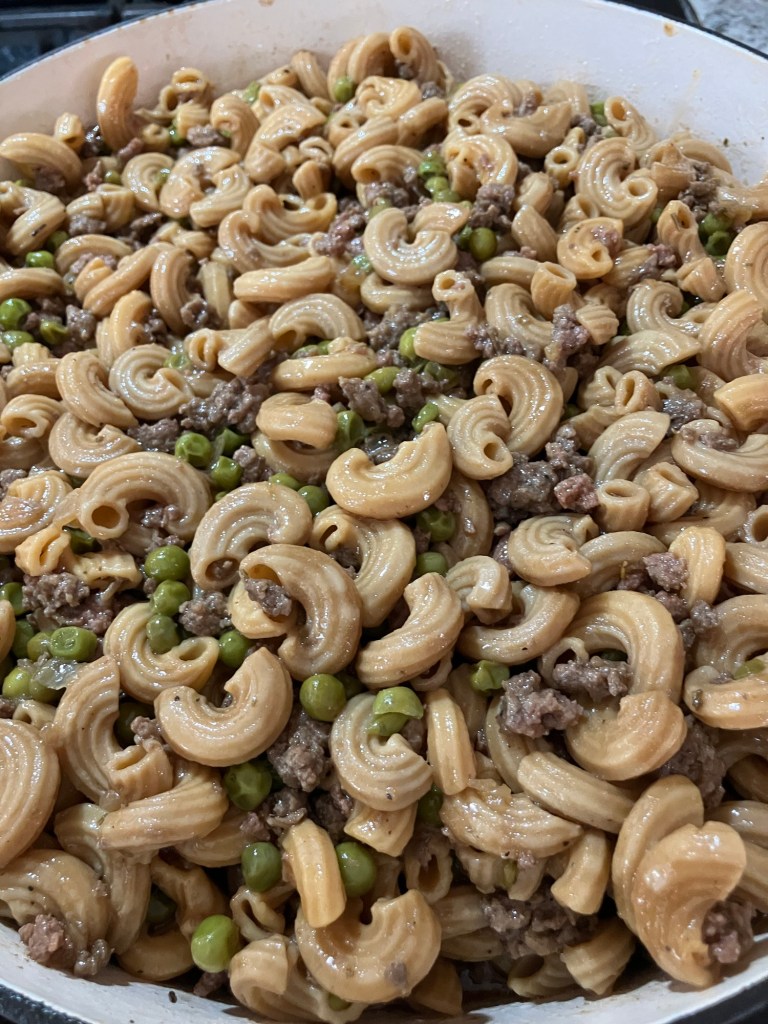
This simple and fast meal used several items from my refrigerator and pantry that I had on hand without having to plan ahead a week or more in advance. Not to mention, it used up leftovers that otherwise might not have gotten eaten.
Being able to create a skillet from a framework comes from having a well stocked pantry and an open mind. I don’t have set measurements or ingredients.
No more stressing about the dreaded missing ingredient! Recipe frameworks allow me flexibility, freedom, and creativity in the kitchen which lowers my stress and increases my desire to cook nourishing meals for my family. It also lowers our grocery bill and stretches food farther.
 Cora's Cottage
Leave a comment