
Upkeep on a garden can often be a lot of work, especially if there are not systems in place to keep up on watering and weeding.
It doesn’t take long after a rain for weeds to start popping up and growing quickly. Before you know it the Amazon is growing where your garden was the day before.
On the other hand, when the rain doesn’t come, the ground can get hard and cracked. Slowly the plants begin to wilt and die if they don’t receive water from another source.
Some years the earthworms, bees, and butterflies are plentiful and other years they are replaced with aphids, potato bugs, and blight.
None of these scenarios are good for the garden or the gardener, so finding ways to combat weeds, drought, and pests are important.
Automatic Water
While watering can absolutely be done manually, whether that means standing outside and watering or moving hoses and turning the water on and off as needed, it is much easier and more efficient to set up water so that it is automatic and only needs changed based on rainfall and temperature.
I made half my garden automatic for the gardening season last year and it was the best thing I did, so of course I set my whole garden up on automatic water this year.
Timers
Timers are a key component to watering automatically. They come in lots of different styles, but my personal favorite is the kind that can be set to run at set intervals for a set amount of time. This allows me to set my water to run as often as ever hour or up to every 7 days for a set period of time without having to do a thing.
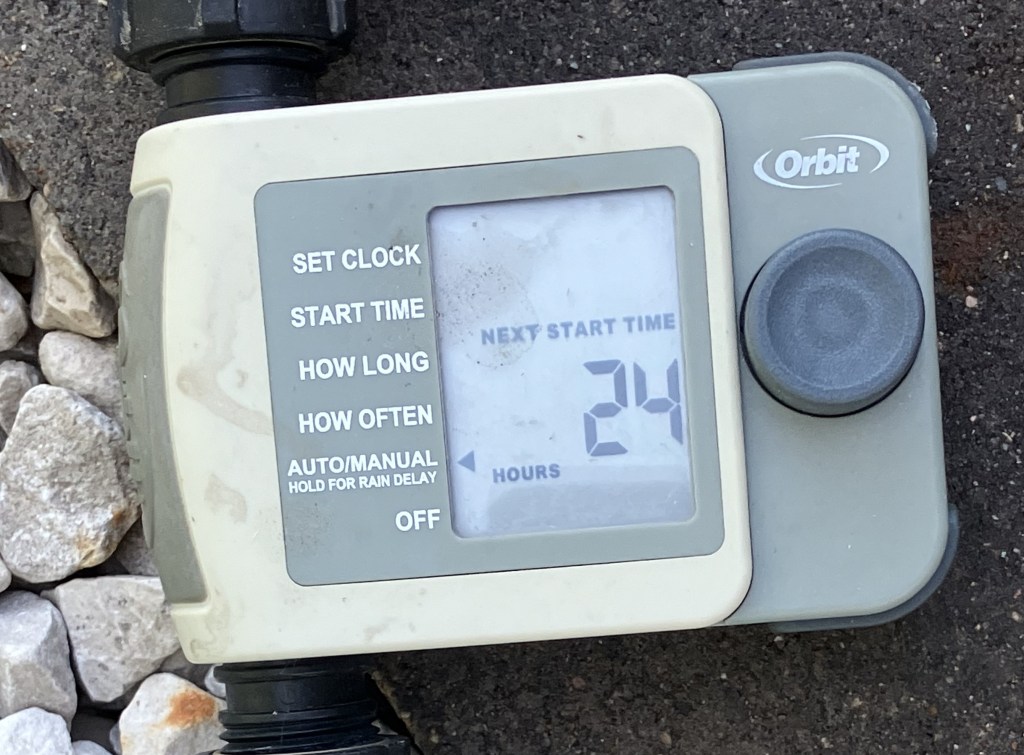
These types of timers are great for planting seeds in ground that need to be watered frequently. In fact, I never once had to water seeds manually this year and had a great stand just from using timed water to run every 6 to 12 hours.
Other types of timers include ones that must be manually set for a specific period of time each time you want it run. So if you decide that your plants need water you must go to the timer and turn the dial for the amount of time you would like the water to run, after that time as elapsed the time will click off, stopping the flow of water. These timers generally have a maximum run time of 2 hours.
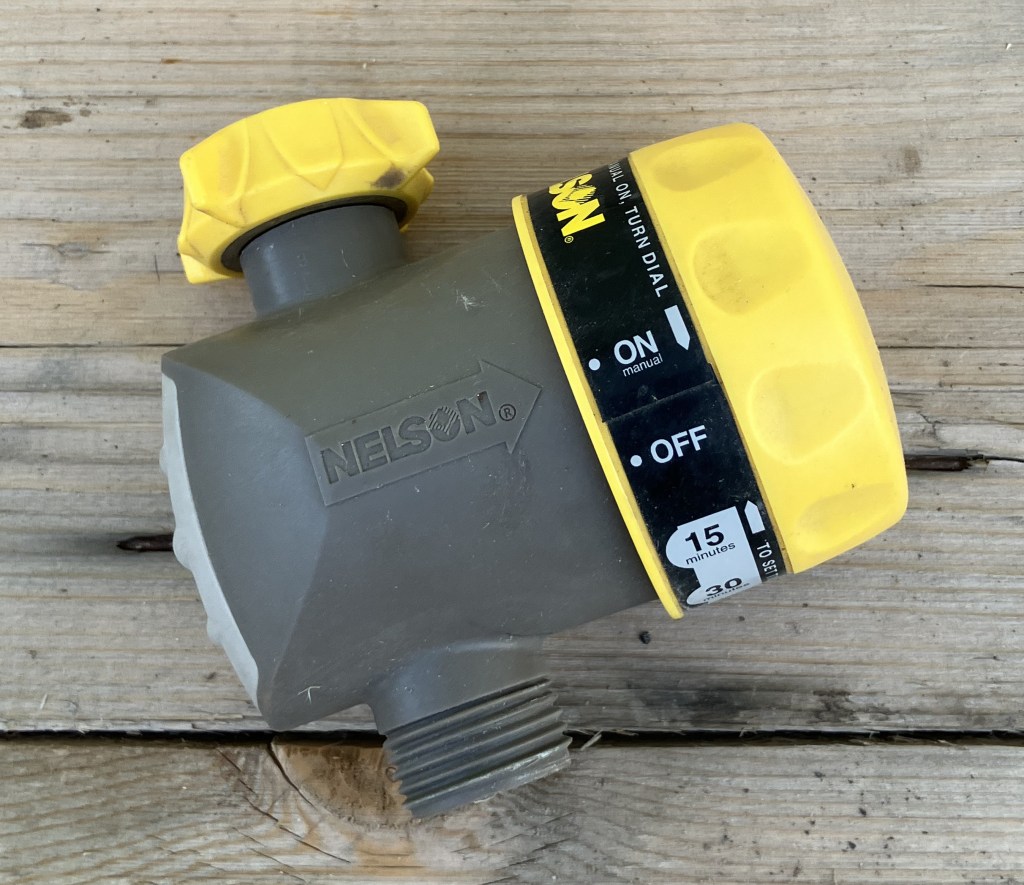
There are fancier timers that can be controlled and set from your phone as well. These are more expensive but allow you to adjust the water on your garden from anywhere.
Quality Hoses
While there are lots of options out there for hoses, it is definitely worth it to get quality hoses. Not only do they last longer but they do not want I kink and stop the flow of water nearly as easily.
I broke this cardinal rule this year and bought cheap 15 foot hoses to go from the four ways to the soaker hoses. In less than 2 weeks, I had to replace one due cracking and leaking. The remaining hoses, while pliable, are constantly wanting to kink and stop the flow of water.
I really like Stanley hoses for quality hoses as they are pliable and easy to work worth while being sturdy enough that they don’t easily kink, and they hold up to general wear and tear.
Soaker Hoses
Soaker hoses are one of my favorite ways to water because I lose little to no water to evaporation. They lay well under mulch and can be weaved up and down short rows or in raised beds. They also work well in a fully automatic system because the wind does not affect the water getting to plants which is a true concern where I live.
Four Ways and Y’s
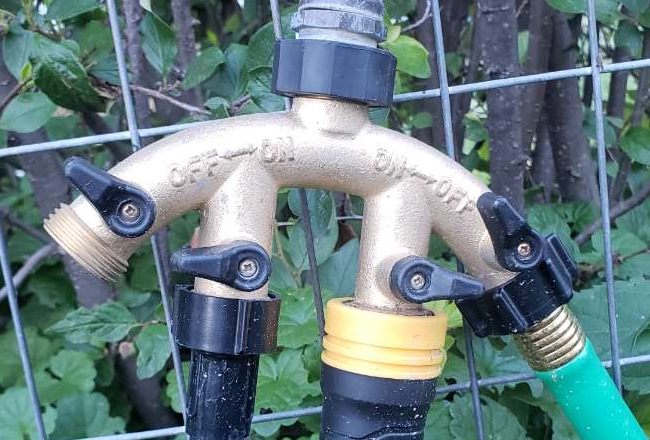
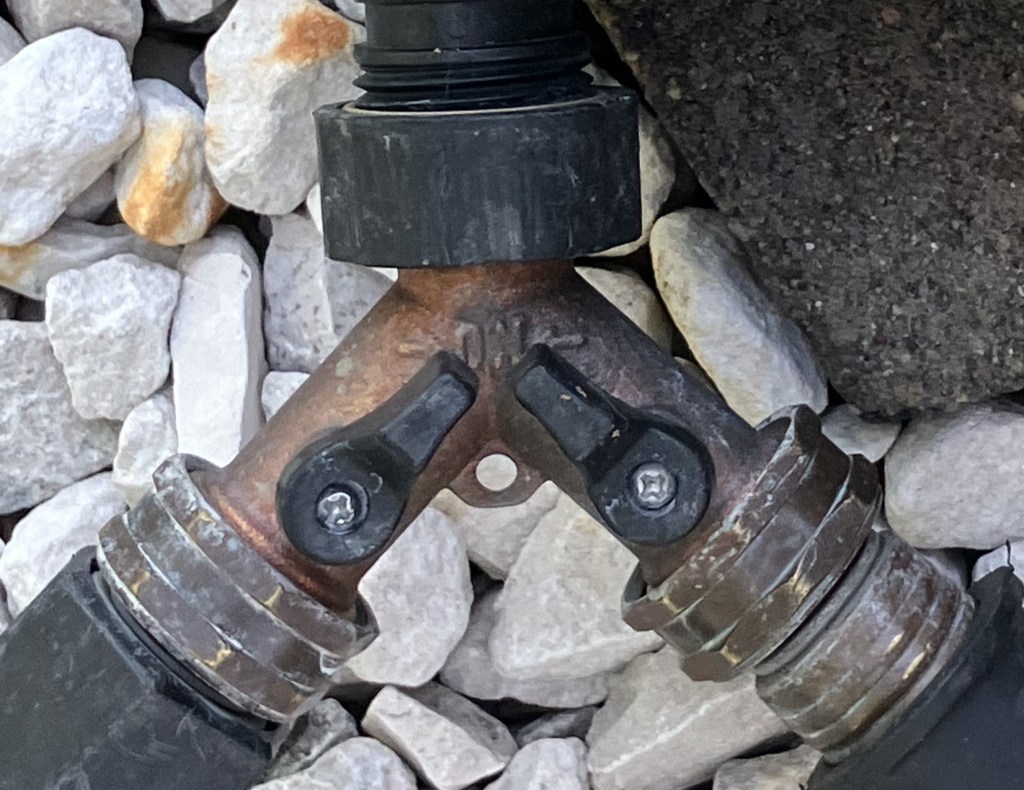
To keep water flowing to all the various hoses, four-ways and y’s are a necessity. I use these two water control systems both at the water source and in various strategic places throughout my garden to allow water to be adjusted for each plant variety and garden bed as needed.
The setup I have found most helpful is to have four ways at the end of rows where short hoses (5-15 feet) can be run to each soaker hose. This allows fewer hoses to be run from the water source and for the water to be turned off at each hose on the four way.
Weed Control
Weeds can quickly overtake a garden if you do not tend to them, so it is best to have a plan in place and implement it early before the weeds become too big.
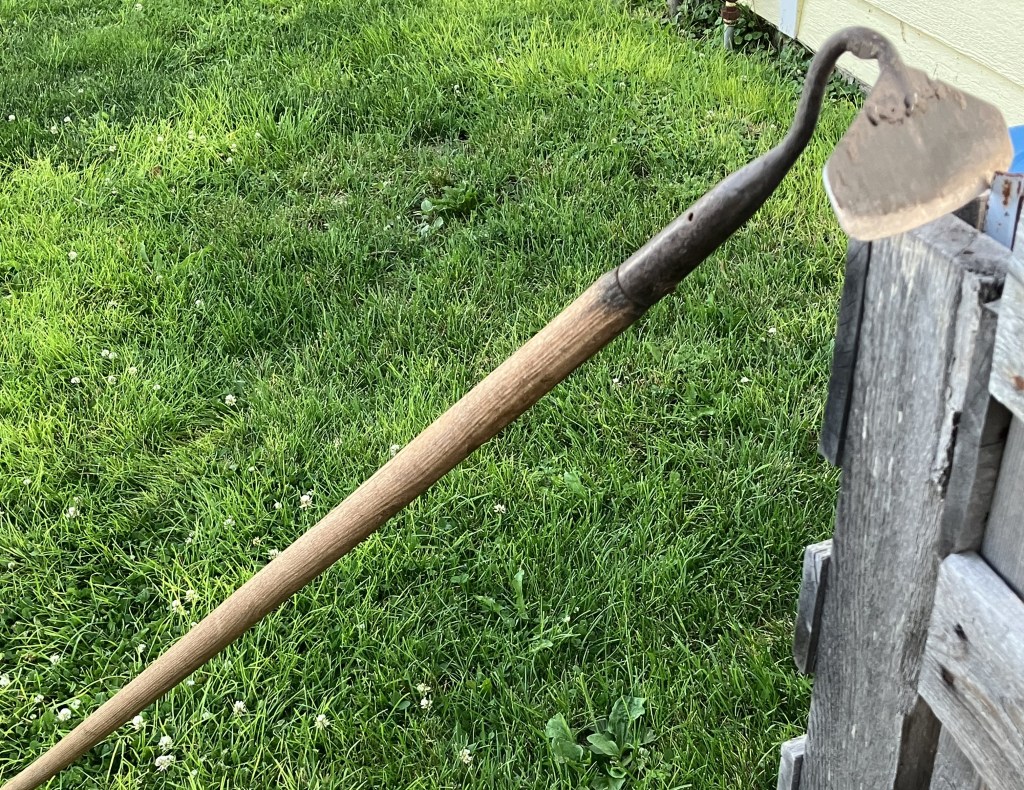
Hoe
Early in the garden season I will use a hoe to get rid of weeds, but this is definitely not my favorite task and takes a lot of time, especially if I were to use it as my primary weed control all summer. This is why finding alternative methods to keep weeds under control is so important, and mulch is one of my favorite ways to do just that!
Mulch
Mulch not only can keep weeds under control but it helps the soil to hold unto water better reduce the amount of watering you must do. There are a variety of mulching materials, but my favorite is grass clippings.
When using grass clippings in the garden, it is important to find clippings that have not come from lawns that have been treated or sprayed with herbicides and to get the grass on the garden as quickly as possible though it isn’t deal breaker if you can’t.
One of the best methods I have found is to mulch immediately after mowing and to make my mulch layers thick. As a general rule, I try for minimum of 4-6 inches of mulch. Otherwise, I will find myself needing to pull weeds before too long and needing to add to the mulch layers.
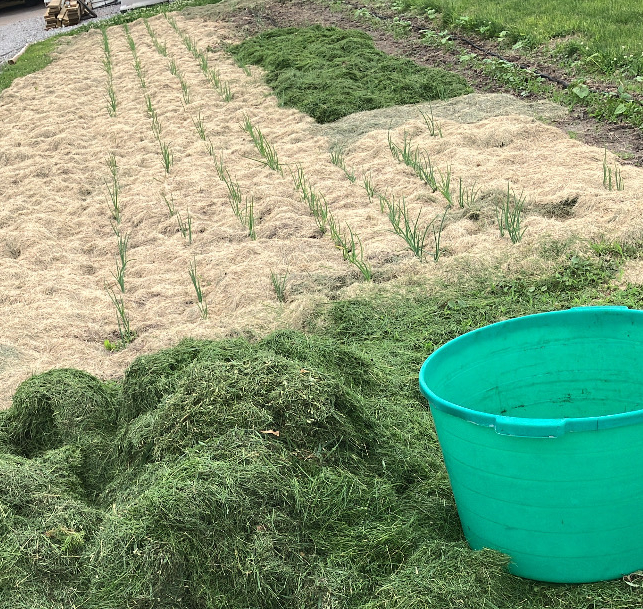
Grass clippings decompose quickly, so layering them on this thickly generally isn’t an issue for future garden seasons because by the fall or following spring the remaining clippings will work right into the soil, helping to amend it and make it more fertile.
If grass clippings aren’t for you, there are several other options including leaves, pine needles, wood, straw, and canvas or plastic weed barrier.
Pest Control
Raised Beds
Raised beds are a great way to eliminate ground pests from being a problem. Moles, voles, and rabbits can’t reach my lettuce and other tender vegetables when I put them into raised beds.
Raised beds to help with pests don’t have to be anything fancy, in fact my raised beds are old lick tubs from local ranchers. Not only were they free, but it recycles a product that the ranchers can’t reuse, but are a byproduct of well fed cattle.
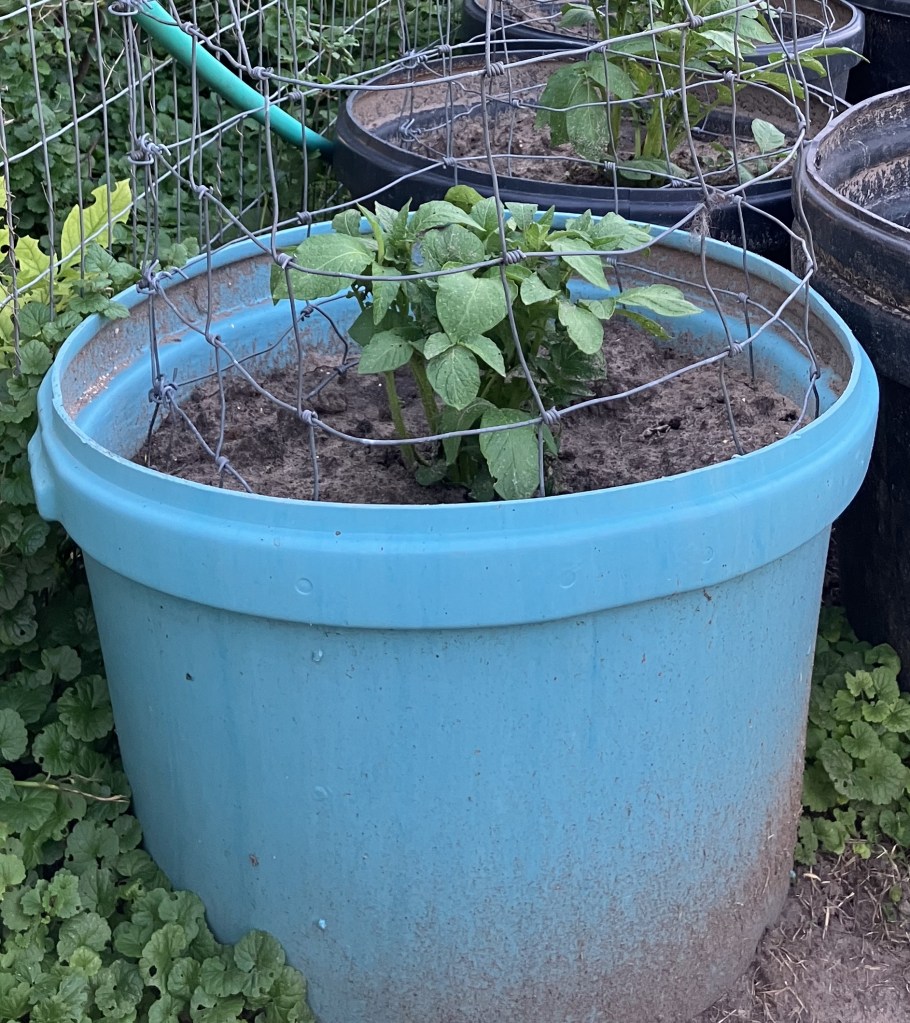
Other materials that could work for raised beds include old stock tanks, homemade raised beds from wood, or old barrels cut in half. There are also lots of good options for raised beds that can be purchased if you don’t want to or can’t find materials to reuse or build your own raised beds.
Cages/Fencing
Another option for pests is cages or fencing. Physical barriers can be a deterrent for rabbits and raccoons among other pests, but they also work well for dogs (which just so happens to be one of my most destructive “pests” most years since I live inside city limits).
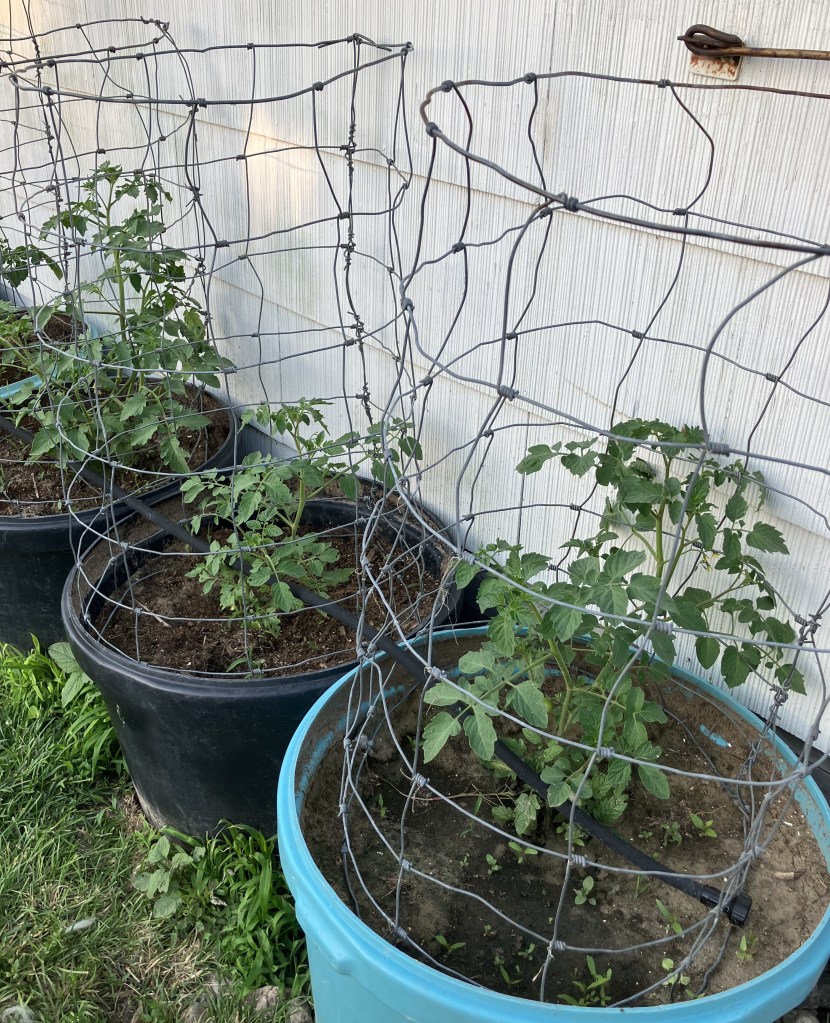
Cages can help to protect your plants, but they also provide some stability for plants like tomatoes as they grow and bush out. They help to give structure without restricting the plant from growing.
Peppermint
When it comes to smaller pests such as aphids and potato bugs, other methods are needed to keep them from ruining a crop. Peppermint, fresh and peppermint essential oil, have proven helpful in deterring such pests.
The biggest factor in having peppermint work, in my experience, is to apply it early and often. A large infestation is usually too much for peppermint to be able to handle and I will resort to more severe options.
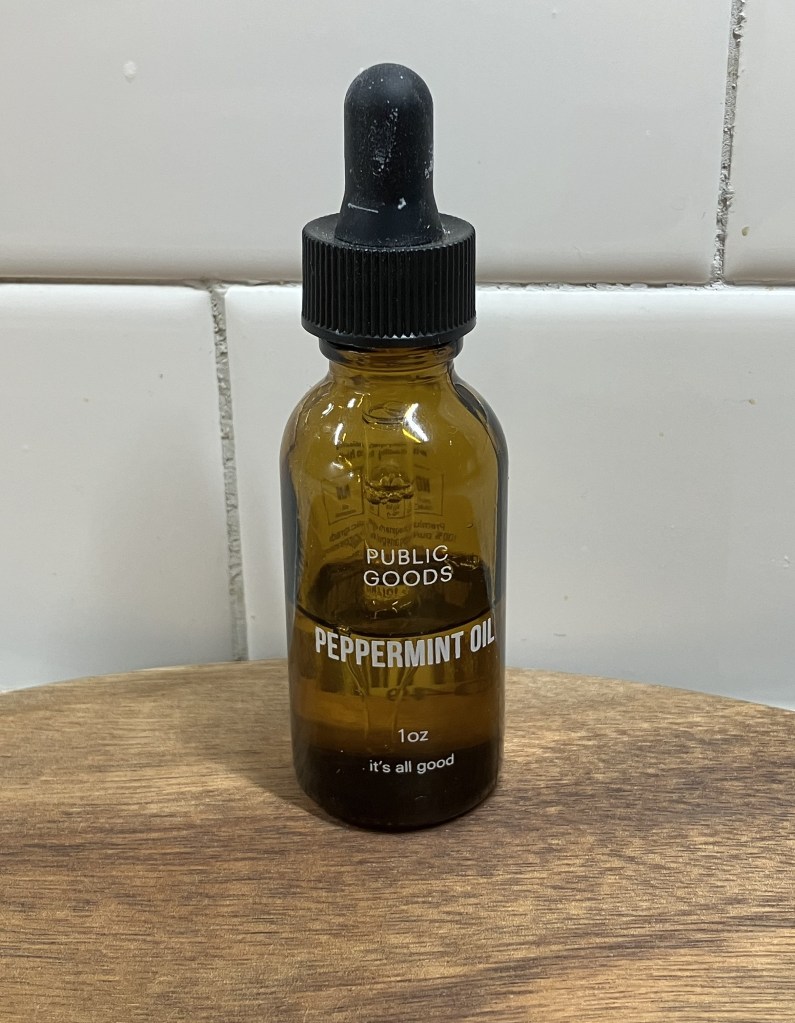
Though I have not used it before, neem oil can be a good option if used correctly. It is a pest deterrent I plan to add to my arsenal this year!
One of the keys to having a successful garden is having the tools and strategies to make it successful for you in your current circumstances and location.
Finding a water system or weed and pest control methods that works for you can make the gardening season much less stressful and much more successful because your plants are getting the water and nutrients they need without having to battle weeds.
It is important to keep in mind that what works in one location for one gardener may not work for another. Climate can make a huge difference in which gardening methods, tools, and materials are successful.
Someone who is retired and has lots of time to weed their garden might have a lovely, successful garden without mulching, but if you work full-time or have littles at home, that likely isn’t realistic for you. Mulching will not only cut down on the weeding that will be necessary but will decrease time spent watering. Neither is right or wrong it is just what works for each gardener.
If something isn’t working in your garden, experiment and change things. Failures are just lessons learned from which we can grow our knowledge. Even a garden that is working can be improved upon. Let us keep learning and growing alongside our gardens!
To follow along and keeping getting more recipes, tips and tricks, and how-tos to cut out harmful ingredients from your life and become more self- and community-sufficient; subscribe to get my blogs straight to your inbox!
 Cora's Cottage
Leave a comment