
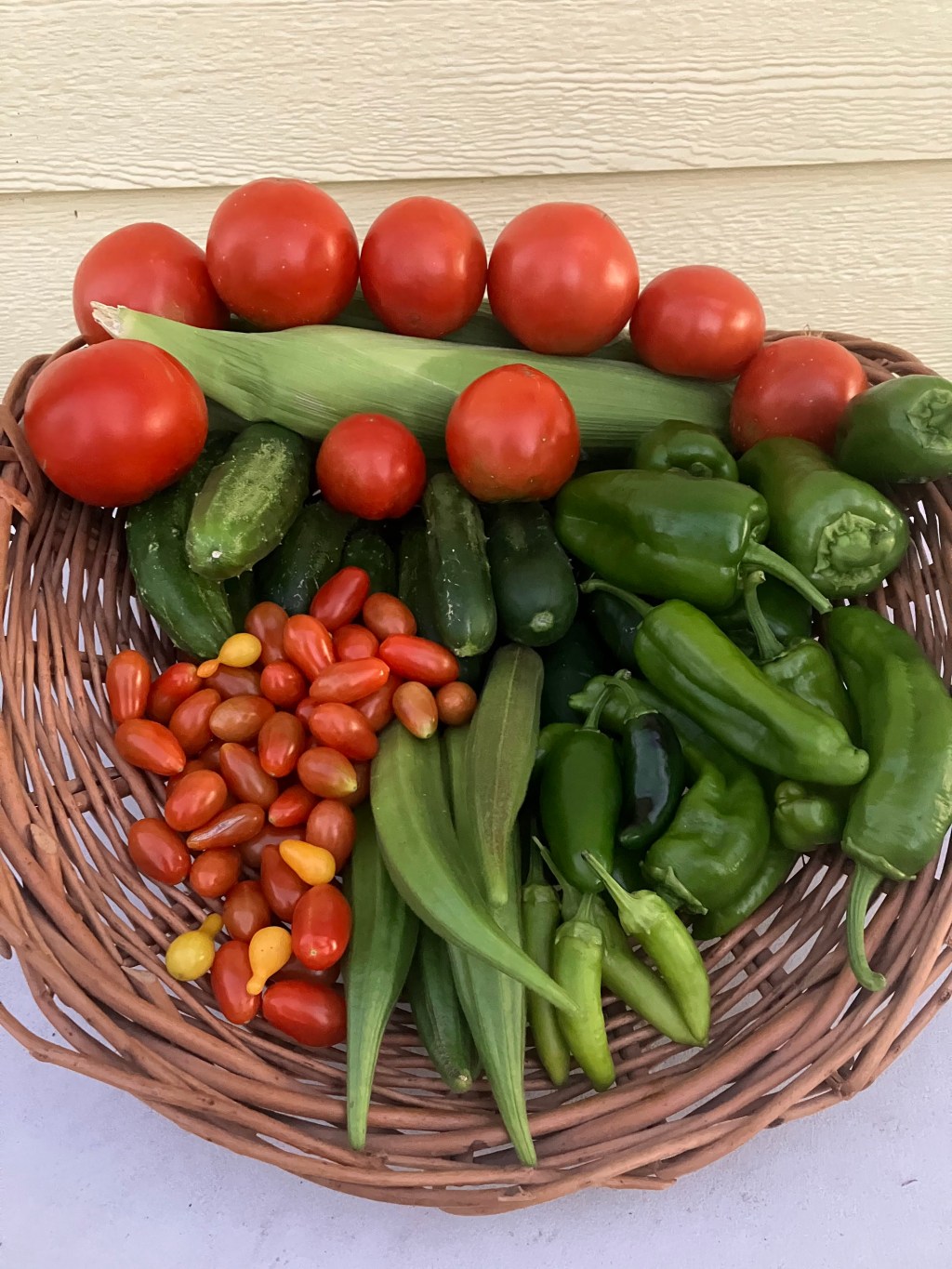
It’s that time of year again when all the seed catalogs are landing in our mailboxes. Colorful seed packets and beautiful photography of luscious gardens entice us to place our orders before they sell out!
But, how many seeds do we actually need? What will we actually plant? More importantly, what will we actually use in our kitchens? After all, growing a large garden does us no good if we just throw all of the produce away instead of using it in our kitchens.
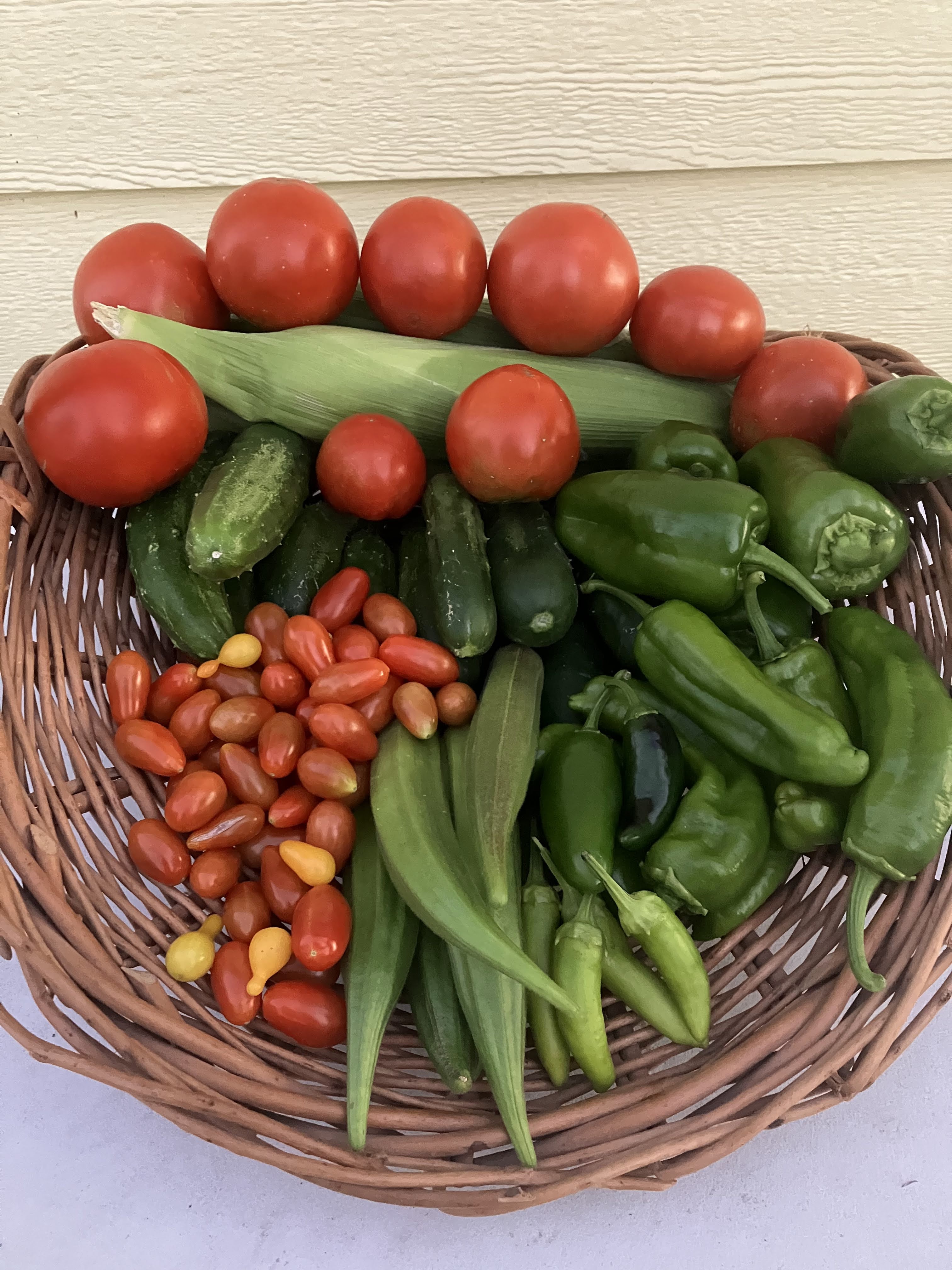
The key to planting a garden that serves your family is to know what your family uses. If you family doesn’t care for cabbage … Don’t plant cabbage. If you family loves lettuce, be sure that is one item you actually get in the ground every year.
To know what your family uses, you will have to take stock of what you eat in a year. What are your favorite dishes? How much of each dish do you eat in a year? What ingredients are in the dish and which of those ingredients can you grow in your garden?
This will be difficult the first year or so, but over time it will get easier to know how much your family eats and therefore how much you need to plant. If you are just starting this method this year, start with an educated guess of things that you eat of a lot of to begin with.
For future years, keep notes on what you eat every week. Do you eat a lot of spaghetti and lasagna and things that take red sauce? Or does your family eat a lot of vegetables like carrots, corn, and green beans.
Note how much of each of these items you eat in a given week so that you can total it at the end of the year and know how much you will need to plant to replace those store bought items with homegrown ones next year.
Once you have taken inventory of what your family uses, it is time to dive into actually planning out the garden!
Map Out Your Space
Now that you know how much your family needs, it is time to figure out how much you have room to plant!
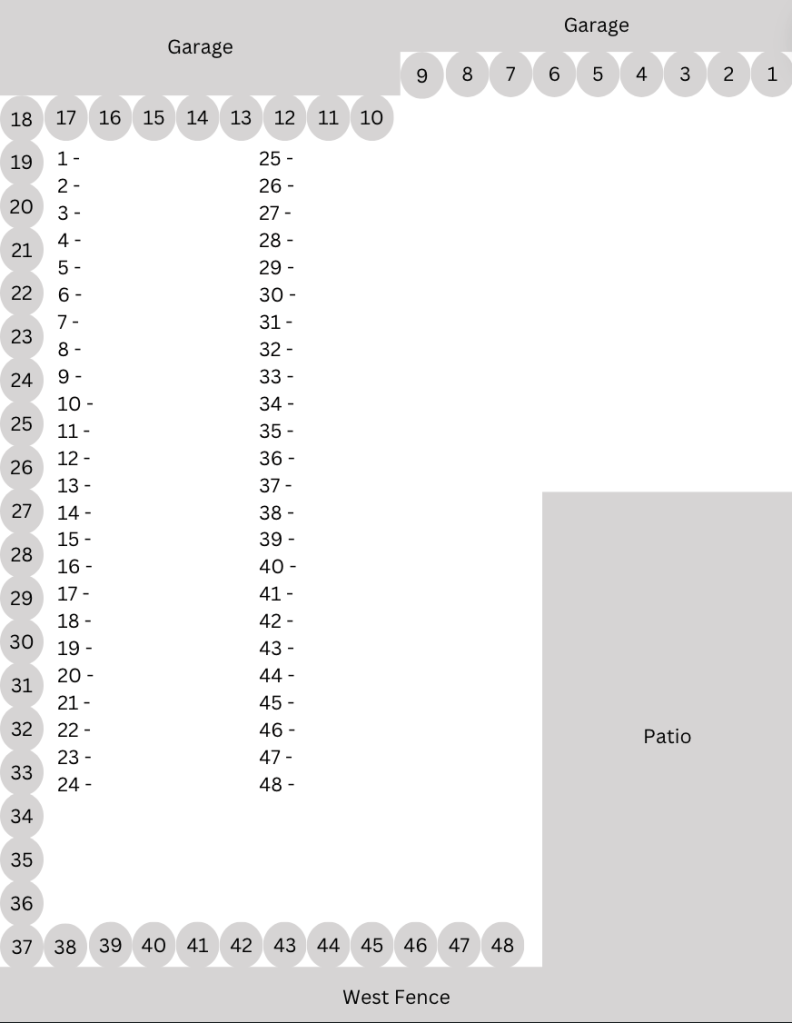
Start by mapping out your garden space to scale. One of my favorite ways to do this is with Canva so that is reusable year after year, but this can also be done with paper and pencil.
Don’t just map out the physical area and the containers you have to plant in, but also where you will run hoses for water, where your water supply comes from, and any walking paths you will need to get to various plants to care for them throughout the growing season.
Plan Your Plants
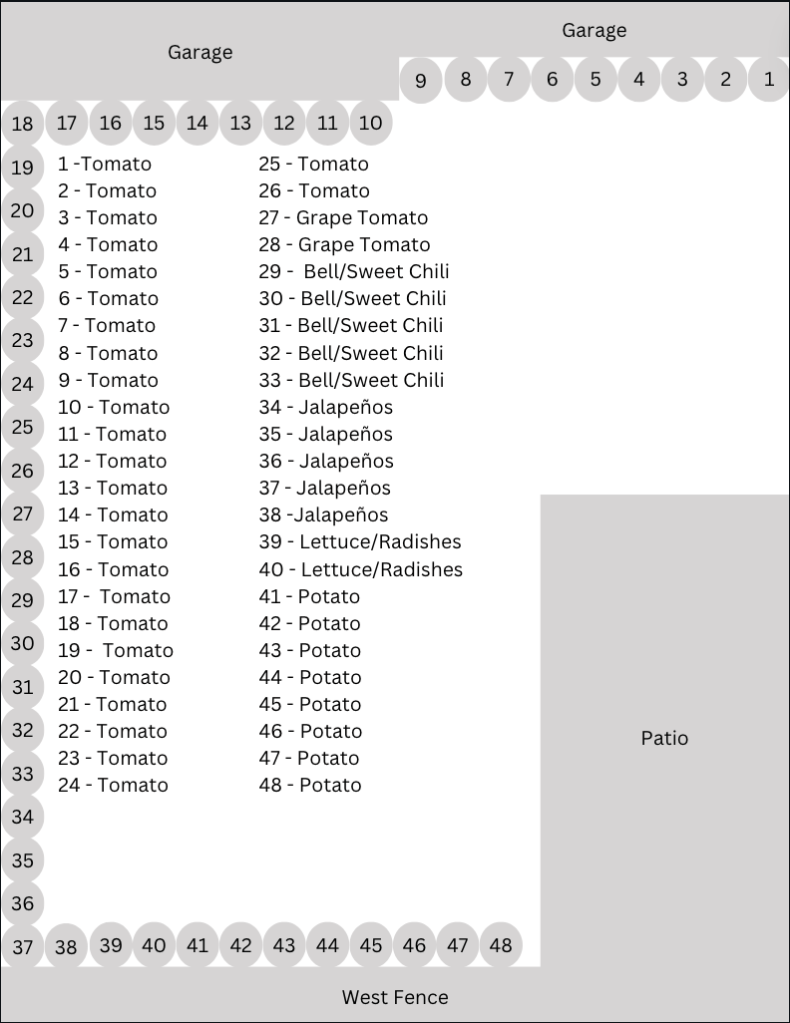
You have how much your family can use and you have how much room you have available to plant, now it is time to actually plan out your garden!
Since you know which plants your family will use the most of, start with those. Start by adding those plants to your gardening space. If you can’t fit all the plants your family could use into the space you have, you will have to decide if it is more important to plant some of each product your family will use or if it is more important to fully replace just a couple of things you purchase from the store each year.
There is no right or wrong way to do this. If you choose one method and it doesn’t work for your family, adjust it for the following year. What you choose to do one year may not work in the following year as your family’s needs grow and change.
Taking Inventory
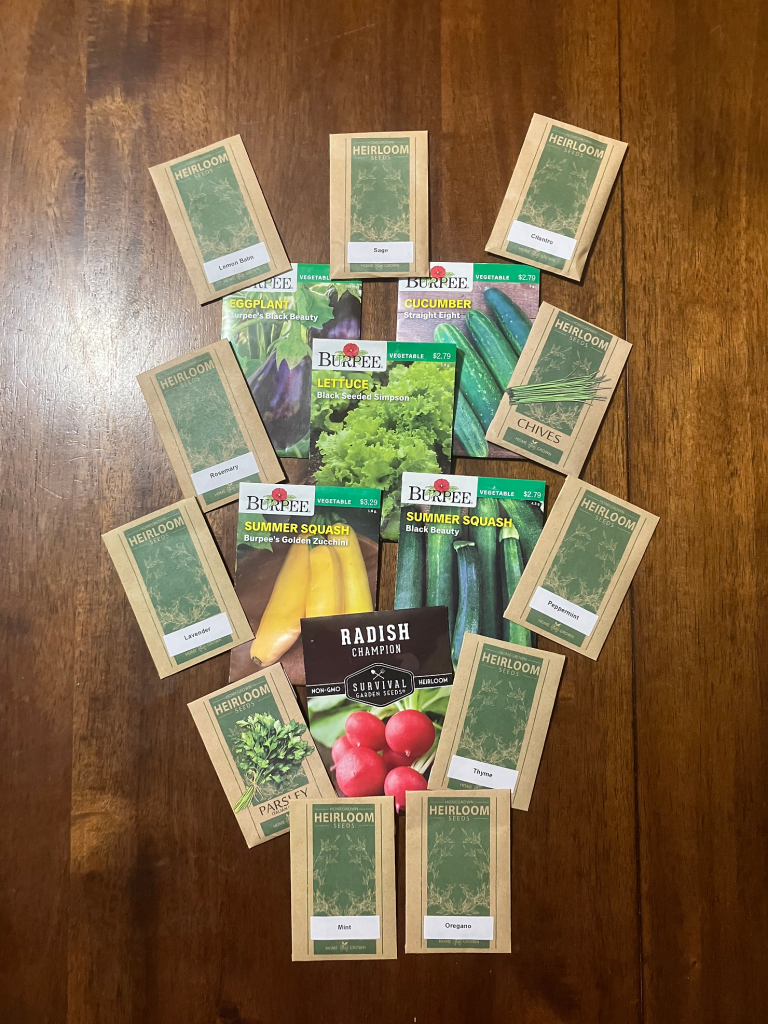
With a plan for what you are going to plant, now it is time to take inventory of what seeds you have on hand. Seeds have a limited shelf life before they are unlikely to germinate, so it is best to use your seeds within a year or two.
To use your seeds quickly, you have to know what you have on hand so that you aren’t ordering lots of seeds you already have on hand. Start by gathering all of your seeds and organizing them. There are lots of creative ways out there to organize yours seeds, but my favorite way is using photo boxes.
There are several reason that I like to store my seeds in photo boxes:
- It keeps all my seeds in one place and easy to transport.
- While keeping all my seeds together, it also allows me to remove just a single plant type out to the garden at a time to prevent accidents from happening. (Forgetting a seed box outside overnight when it rains for example.)
- It allows me to easily label my seeds so I know what each container is without having to open them all up.
Once your seeds are organized in a way that makes sense and works for you, take inventory of each plant type that you have in your collection. Don’t just count the number of seed packets you have, but note how many seeds are in each packet and if the packet has been opened.
Make a list of the seeds that you will need more of and how much you will need as you go so that you have a shopping list to follow. Having a list will keep you from buying seeds that you don’t need and forgetting ones that you do need.
Shop for Seeds
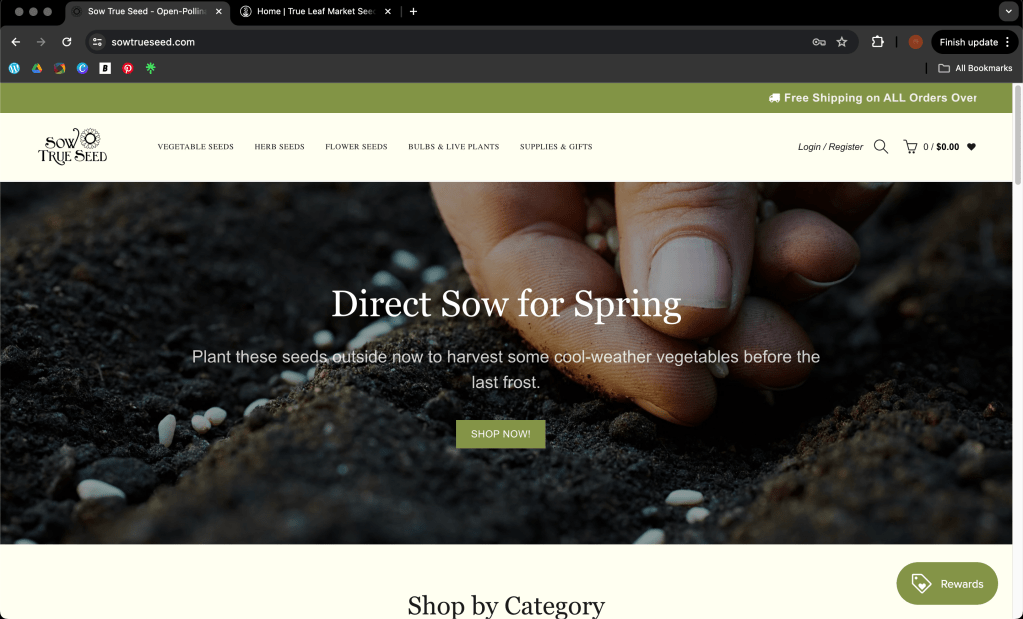
With your list of seeds that you need for this year, you can start your shopping journey!
As you shop be sure you are sticking to only what you have on your list so that you are not carrying over a large inventory of seeds to the following year. Remember seeds decrease their germination rate with each passing year.
If you are wanting to try new seeds, spend some time researching the seeds before you purchase them. Make sure that they are a good fit for your area and climate and will fit well in your growing space.
While reading the descriptions in seed catalogs can be helpful, sometimes diving deeper to see what other people say about a particular variety can be helpful. YouTube is a fantastic resource for this as are some online forums.
However, in my experience the best source of information is always your neighbors. Reach out to those who garden in your local community and see what has worked for them and what hasn’t worked. Oftentimes they can be a valuable source of knowledge that you wouldn’t find online. Not to mention you might just make some new friends.
Take Notes!
Even though you have your garden planned out and your seeds ordered, you still have work to do to prepare for next year. In order to make your planning easier in the coming years, take good notes of your garden.
Important things to track include the plant variety, planting date, plant spacing and location, general weather patterns for year, harvest dates, and how each crop produces.
- – Plant varieties: Don’t just record that you planted a tomato, track exactly which variety of tomato you planted. For example, Better Boy, Early Girl, or Beef Steak.
- – Planting Date: Record on which day you planted each individual plant variety. For example if you planted peppers on the 18th of May, but you planted tomatoes on the 25th of May.
- – Plant Spacing & Location: While the location of where you planted each plant variety will be recorded in your map, you should also record the spacing between plants. For example, if you left two feet between each tomato plant and one foot between each pepper plant. This can be helpful when you’re going back to see why something did or did not work. Do you need more spacing or will less spacing between plants work?
- – General Weather Patterns: Invest in a good rain gauge and pay attention to what the weather in your area during your growing season. If you’re having an exceptionally wet or dry year those are important factors to note. The same can be true for the temperature and first and last frost dates. Are they outliers for what your area typically experiences? These things will be important to know when deciding why things did or didn’t work, it may have been something completely out of your control. In addition to recording weather patterns, take notes of different pest problems you have. This can be anything from weeds to bugs and be as specific as possible. If you want to know what a particular weed or bug that you have infesting your garden is, many times a local extension office can help you identify it.
- – Harvest Dates: Take note of when you start harvesting and when you stop harvesting for each plant. While the seed packet might say one thing, it could be slightly different in your area or your garden. (Those zones on the packet are really big!) Having these notes to look back on for future years could help you know when to plant. Do you need to plant a little bit earlier to avoid the first frost in the fall or do you need to plant a little bit later to avoid the last frost date in the spring?
- – Production: Keeping track of your production for each plant type can help you know if you planted enough, too much, or if it’s something you even want to plant again in the future. Keep in mind that just because something didn’t work one year doesn’t mean it won’t work in the future. Look for why something didn’t produce and see if it’s something you can fix or was it something outside of your control that is unusual for your area. Did you have an extremely dry summer and you were trying to do dry land crops? Did you have an especially wet year and it drowned something out? Did you have a super late frost date that killed a lot of plants or a super early one in the fall that killed things off early? Many of these things aren’t something you can control, but some things you can. Maybe you need to amend your soil or be more aggressive when going after a pests.
Tracking these items will help you to know how much of each crop to plant in the future so that you have the production needed to cover the amount your family will eat. This can prevent you from planting too much or not enough. These notes can also help you decide if you need to make adjustments to get a better yield out of the same amount of crop.
Taking the time to plan out and be strategic about your garden can help to increase your success greatly. While it may not seem like it in the first year or two, good notes can increase your production much sooner than you would have increased it otherwise. Don’t be afraid to experiment and try new things. You might just find the Holy Grail of growing for your particular garden. Happy gardening friends!
 Cora's Cottage
Leave a comment