Disclosure: This post contains affiliate links and I may earn a small commission at no additional cost to you when you use a link.
I don’t know if I am the only one, but my recipes used to be a mess. Sometimes it would take me just as much time to find the recipe as it did to make the recipe. Finally, I started to look into different recipe organization methods, and I found a few that work really well when I adjusted and combined them to fit our needs.
While I found these recipe organization methods super helpful, these can be adapted or changed to fit your personal style and preferences. I found that having recipes that are easy to find made me more excited to cook or bake not to mention more likely to get into the kitchen in the first place.
The 3 main methods I use to store and organize my recipes are:
- Pinterest or Cookbooks
- Notes App or Recipe Box
- A Recipe Binder
I use each type of organization for specific items or a specific step in my recipe curation process. In each of these types of organization that I use, specific categories are used to help limit the amount of time I spend hunting down recipes.
Pinterest or Cookbooks
Pinterest or cookbooks are the first step in the process of finding and trying new recipes. I love that on Pinterest you can search for almost any ingredient in a recipe and it will populate hundreds if not thousands of results. This makes finding recipes super simple when I have a specific ingredient I want to use up. Cookbooks are great when I have found a specific chef or style of cooking that I enjoy. Then I can can buy the cookbook that dives deeper into the that chef or cooking style. Some of my favorite cookbooks are Rustic Farmhouse Slow Cooker, A Taste of Cowboy, and Faith, Family and the Feast (all pictured below). These two resources are more for finding and researching new recipes to try in my organization method.
Once a recipe has been found, I either mark the page or pin the recipe to a board so that I can come back to try the recipe out. When pinning a recipe to a board, I try to be as specific and organized as possible so that when I am busy and looking for a recipe, I don’t have to start the research process from scratch. For example, I will start with a baking board that I will organize further by using sections to label cakes, cookies, brownies, and pies as their own sections so that I can easily find the recipes I am looking for when I go to bake. When the recipe has been tried out, my family and I decide if it is a recipe that we would like to eat again, or make adjustments to and eat again. If the recipe makes the cut, I transfer the recipe into the Notes app on my phone or a recipe card in my recipe box.
Notes App or Recipe Box
When a recipe lands in my Notes app or recipe box, I know that we like the recipe; however, I really enjoy changing and experimenting with recipes to make them into my own. That is the purpose of the Notes app or recipe box in my organizational method. Recipes come to these locations for refining and experimentation. I try adding or removing different ingredients, substituting ingredients, and experimenting with different cooking methods. This is my favorite part of the process and it allows me to get creative with the meals I am feeding my family while adjusting them to best serve our needs.
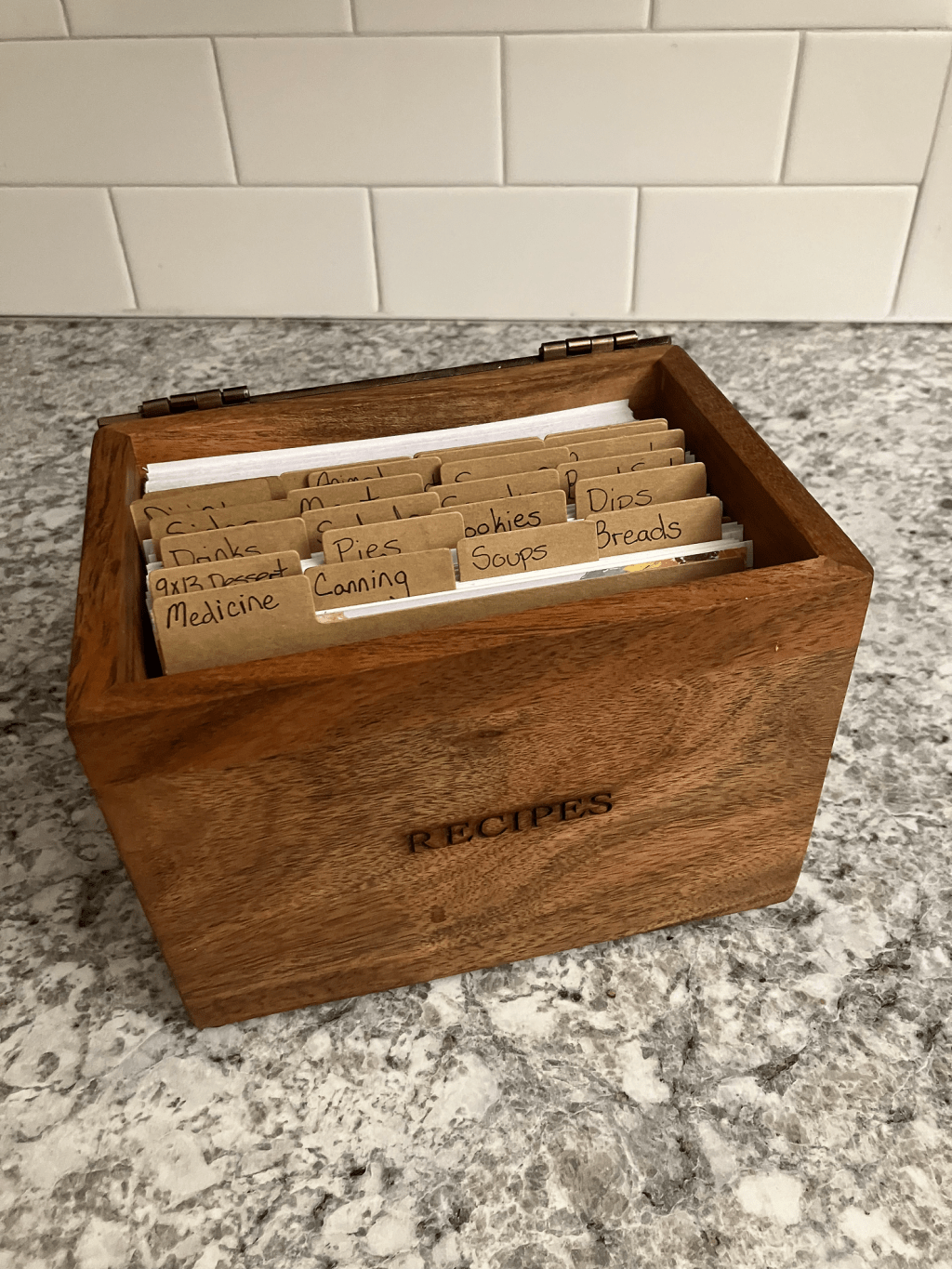
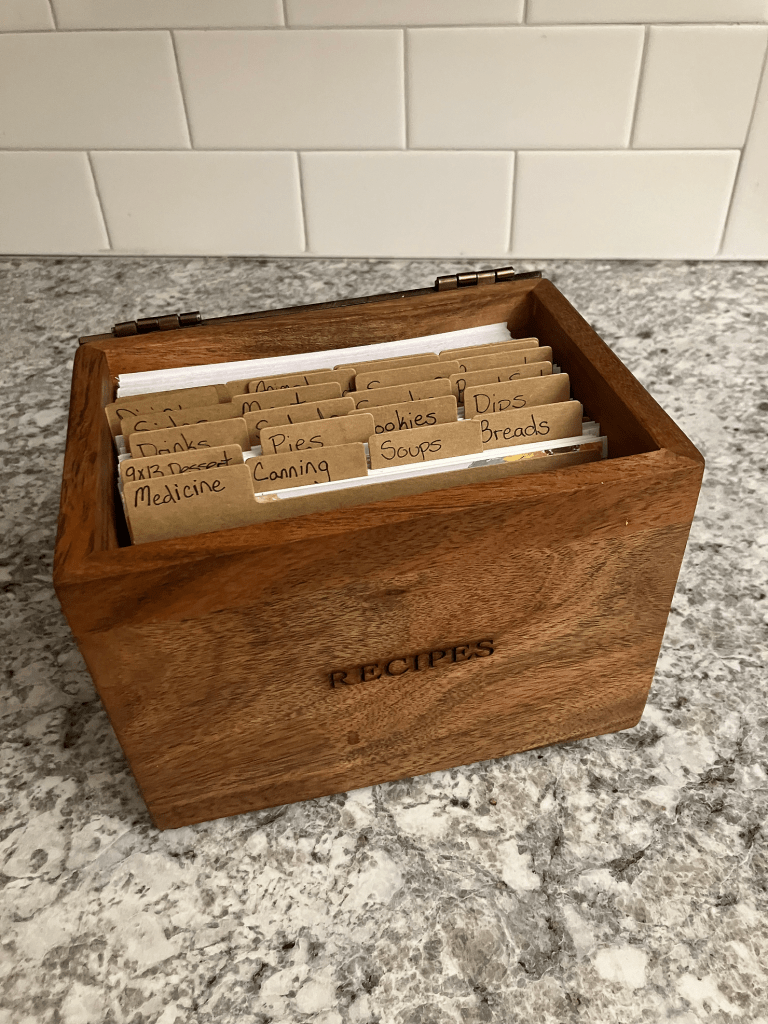
I chose the Notes app or recipe box for this step because it makes it easy to take notes on the recipes, crossing things out and adding things as I try new ingredients, substitutions, and cooking methods. I originally started in the Notes app, but have recently been working on minimizing my screen time as well as I have found it easier to edit recipes to my liking when I use pencil and paper. Since I have gone to putting recipes more in a recipe box rather than on the Notes app, I have needed more recipe cards. However, because recipes do not live in my recipe box forever, I didn’t want to spend money on fancy looking recipe cards. Instead, I have found that large index cards work just as well and actually give me more room to write when I have a recipe with lots of ingredients or instructions. Recipes often stay in this stage of the process where they are being refined for several months, until a final draft recipe is moved on to my recipe binder.
A Recipe Binder
My recipe binder is the final stop in the refinement and organization process for all the recipes in my kitchen. Recipes are only added to the binder once I am done tinkering with it and have added all the variations and substitution options my family enjoys to the recipe. These recipes are typed up and not handwritten so that they are easy to read and pass on to others. They are all protected by slip sheets so that spills and messes will not ruin the final copy of the recipe when I am cooking in the kitchen.
Adding recipes to a binder also allows me to keep them all neatly together and easy to access by dividing the different sections with tabs, or even using different binders for different categories such as baking, smoking, cooking, and preserving and canning. Each binder I use gets a special cover designed on Canva to allow me to quickly differentiate between the binders. With a binder, I am also able to stand the binder up on a cookbook stand to minimize the amount of counter space it takes up when I am working, while also making it easier to read.
The method I use to keep my recipes organized has evolved greatly the longer I have used it, but it fits well with the way I like to cook and bake. It has taken quite a bit of the trial and error to learn what works best for my family to serve the needs we have at this stage of our lives. I am sure that the methods I use to organize my recipes will change as our family grows and evolves, as it will for your family, but one thing I am sure of, no matter how much change, organized recipes make a much happier and efficient kitchen. Happy organizing!
 Cora's Cottage
Leave a comment