
Disclosure: This post contains affiliate links and I may earn a small commission at no additional cost to you when you use a link.
Main sources for this blog include:
– The Encyclopedia of County Living by Carla Emery
– The Self-Sufficient Life and How to Live It by John Seymour
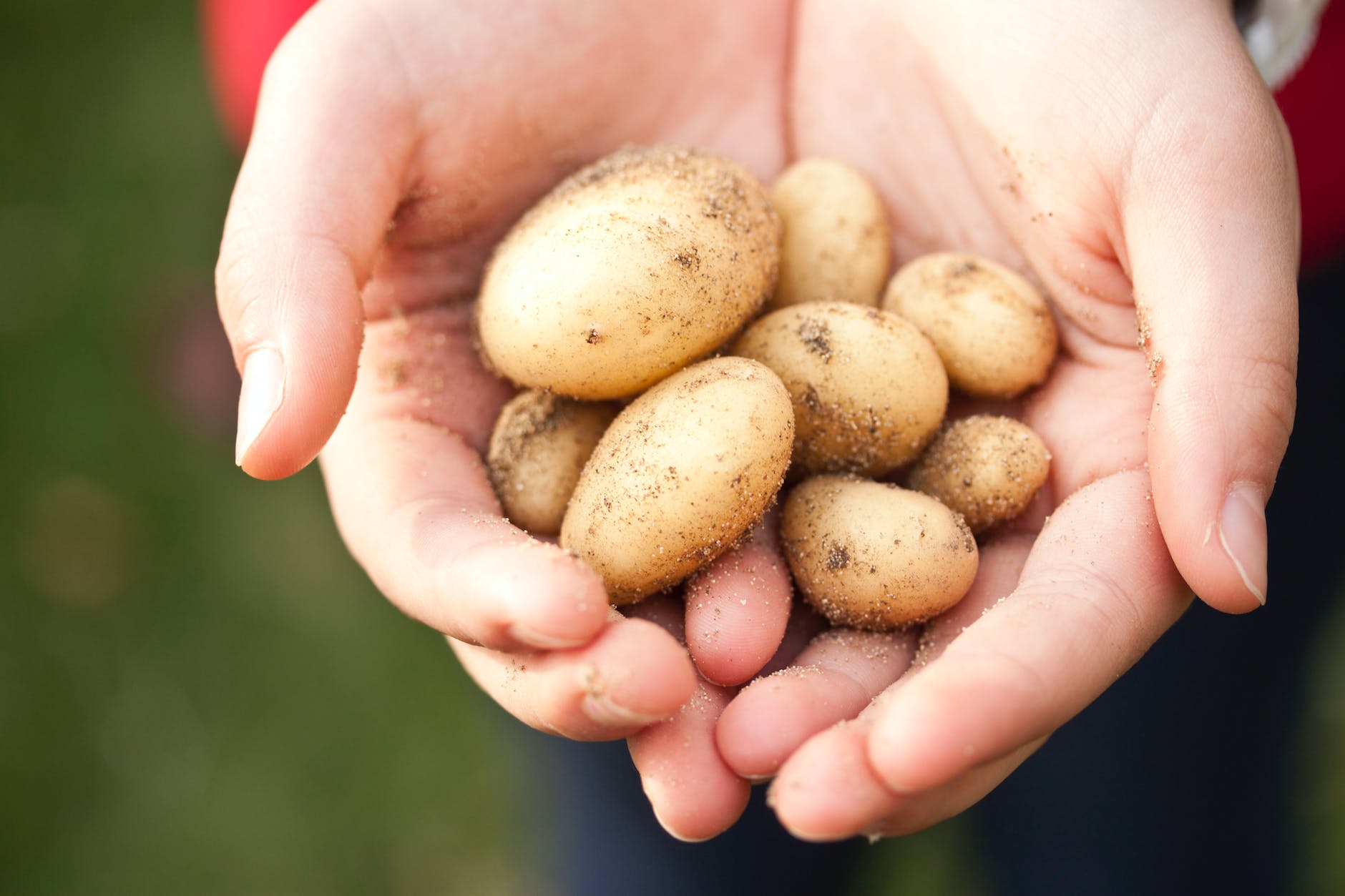
Potatoes can be harvested before the plant has finished producing its full crop, but the full harvest will not be ready until the plant has started to whither and die, but it is better if you can wait until the plant has fully withered. If you are taking from the potatoes for an early harvest, simple feel around in the soil for potatoes near the top. If you have more dense soil, start at one end of the row and proceed systematically until you have reached the end of the row. It is important to recover and firm up the ground where you removed any potatoes. When you are ready for the large harvest, it is easiest to use a potato fork or a spade and dig up the potatoes. Be careful not to slice potatoes, but if you do slice or nick any, be sure to use those first as they will go bad quickly. It is also a good practice to feel around well in the loose dirt as you dig to be sure that you are collecting all the spuds.
After potatoes are harvested, it is good to short the potatoes. One box for potatoes that were cut or nicked and need to be used right away, small potatoes that are best to use early on so that they still have fresh skins and can be used like new potatoes, and a box for potatoes that will be saved for winter.
Before placing potatoes into storage for the winter, it is best to cure them. To cure potatoes, lay them out in a cool, dark place where they are protected from the sun, wind, and rain. The temperature should be between 60°F and 75°F. Be sure that the potatoes do not see any sun or light of any kind as this will begin to turn the potatoes green and make them poisonous. While potatoes are curing they will heal small cuts in the skin and thicken the skin which will help them to store longer.
There are several methods for storing potatoes. One method is to clamp the potatoes as John Seymour describes in The Self-Sufficient Life and How to Live It. However, a more common method of storage potatoes in the United States is in root cellar. To store potatoes in a root cellar, place the potatoes in wooden boxes or baskets. Be sure that it is cool and dark with good ventilation and that your potatoes are not stored near apples. Apples put off a gas that will cause potatoes to sprout. Potatoes are best stored between 40°F and 50°F as any temperatures below 40°F can cause the starch to turn to sugar in an unpleasant way. Temperatures over 50°F can cause the potato to sprout more quickly. It is also important to note that potatoes that freeze are no longer good for human consumption.
Potatoes can be preserved through drying, canning, or freezing. However, drying doesn’t really make sense because potatoes store so well without drying them and it can be a lot of work. Canning potatoes is not recommended because of how dense they are and the fact that they may carry soil even after a thorough washing. However, if you wish to can potatoes and you can find recipes to do so online from resources like Ruth Ann Zimmerman. I have canned potatoes in the past and they work really for soups, stews, and quick meals. Potatoes can be frozen in several forms, but they must be cooked first. Potatoes can be frozen mashed, boiled, or even french-fried; however, French-fried potatoes do not have a very long freezer life and mashed potatoes can become slightly watery.
Potatoes have many health benefits, and as mentioned earlier, they are one of the few plants that can be used to lived off of on its own. One baked potato that weighs 6.1 ounces contains 161 calories, 4.6 grams of protein, and 3.8 grams of fiber. It also delivers 28% of the recommended daily vitamin C, 27% of the recommended daily vitamin B6, 26% of the recommended daily potassium, 19% of the recommended daily manganese, and 12% of the recommended daily magnesium, phosphorus, folate, and niacin. However, when noting these nutritional facts about a potato it is important to remember that the majority of a potatoes nutrients are in the skin. Therefore, peeling potatoes can greatly reduce the nutritional value of a potato. It is also important to note that different methods of preparation can affect the amount of nutrients delivered in each serving as well. For those who are gluten-free potatoes are a great option because they are naturally gluten-free, can be incredibly filling, and are so versatile.
Potatoes are also beneficial because they can improve digestive health. This is because potatoes contain a special kind of starch called resistant starch. Resistant starch acts as both a soluble and insoluble fiber. Soluble fibers have prebiotics that help to promote healthy bacteria in the large intestine, and insoluble fibers help to prevent irritable bowl syndrome and constipation. The amount of resistant starch in potatoes can be increased by cooking them ahead of time and allowing them to cool completely in the fridge before reheating and serving. Potatoes can also help to fight disease because they are so rich in antioxidants. Colorful potatoes contain more antioxidants as do the peels. Reduced blood pressure can also occur from eating potatoes, particularly the skins because potato skins are a rich source of potassium and magnesium which helps the body to eliminate extra sodium that causes blood pressure to rise.
Like many foods, there are hundreds of ways to store and preserve potatoes or use them in your kitchen. Look around for different methods and if the first one you try doesn’t work for you try a new method. Use methods of preserving and cooking potatoes that work for you and your family is important because a method no one cares for won’t get used and all your hard work will be for not. If you are looking for new ideas, there are always plenty of ways online that can be experimented with and adjusted to fit your families tastes!
 Cora's Cottage
Leave a comment