
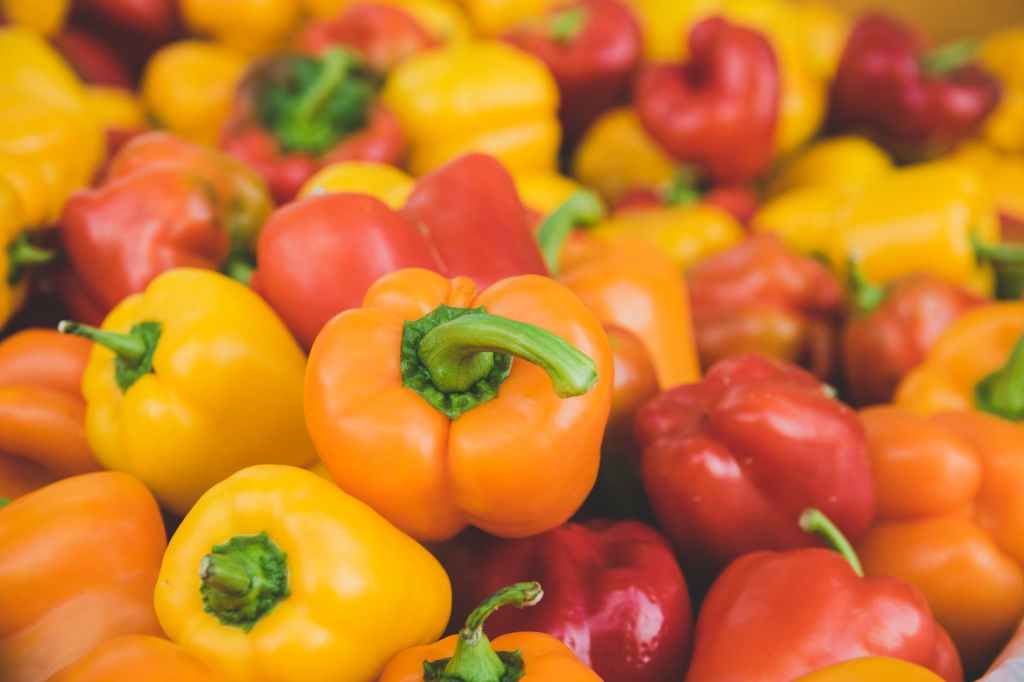
Disclosure: This post contains affiliate links and I may earn a small commission at no additional cost to you when you use a link.
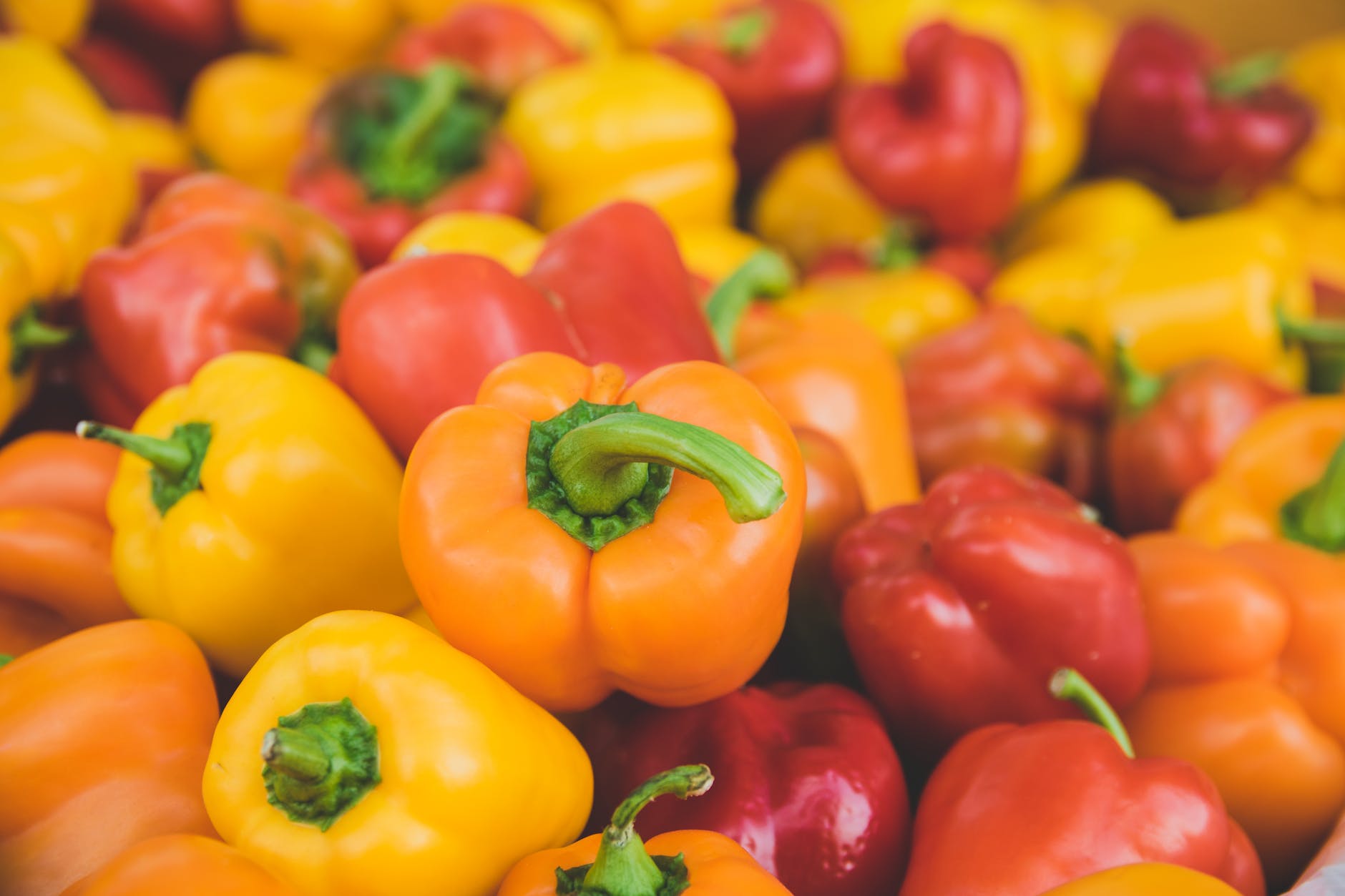
A staple in my garden each year, alongside tomatoes, are peppers both sweet and hot. I get a lot of my information on the history, planting, growing, harvesting, and preserving of peppers from The Encyclopedia of Country Living by Carla Emery and The Self-Sufficient Life and How to Live It by John Seymour.
Like tomatoes, peppers a perennial from South America that is grown as an annual in more temperate climates. Peppers are divided into two main categories: the Grossum group (mild-flavored, sweet peppers) and the Longum group (hot peppers). As a general rule, sweet peppers from Grossum group grow to be larger than hot peppers from the Longum group. Hot peppers tend to grow on larger plants with smaller leaves and produce more fruit than sweet varieties. All peppers are in the Capsicum annum family and vary in color including green, yellow, orange, and red. Most peppers end up red if they are left on the vine long enough.
Peppers are slightly frost hardy. They can handle temperatures as low as 32°F without dying, but it will affect your harvest. For peppers to grow, it must be at least 55°F though they will do much better with day time temperatures of at least 70°F and night time temperatures no lower than 60°F. Peppers are a full-sun plant and require soil that is light, free-draining, and fertile. Peppers require only occasional watering and are best planted outdoors in April or May in most zones. Seeds can be started indoors earlier. Carla Emery suggests 50-70 days before you expect to have your last frost in The Encyclopedia of Country Living. Peppers typically grow to be about 2 feet tall, but in tropical areas they can grow to be as large as 10 feet tall!
When starting seeds indoors, start them 50 to 70 days before your last frost date in light soil between 1/8 and 1/4 inch deep. Seeds should be 1 inch apart and kept moist until they have sprouted. When trying to germinate seeds, a soil temperature of 85°F is best and they should be kept between 75°F and 95°F. When watering the seeds during germination, be sure to water them with warm water to keep from causing cold shock to the seeds which can be fatal. Seedlings should be repotted when they are 2 inches tall to 2 inches apart.
Peppers should be 5-6 inches tall before planting them outdoors and should be planted 1 to 2 feet apart in rows 2 to 3 feet apart. It is best to wait at least 1 week after the last frost but 2-3 weeks is better. It is best not to mulch the ground around the peppers immediately if the ground is still cool, instead wait until the ground is warm to mulch around each plant. Peppers can be grown in a container, but they must have plenty of soil. Sweet peppers need a least a 12-inch pot with 3 gallons of soil 1 foot deep. If growing multiple sweet peppers in a larger container they must be at least 18 inches apart. For hot peppers, they need an 8-inch container with at least a 1/2 gallon of soil 8 inches deep. If growing multiple hot peppers in a larger container they should be planted 6 to 8 inches apart.
Important nutrients when growing peppers include nitrogen, phosphorus, and potassium; however, peppers also need calcium and magnesium as well as traces of other key minerals for most efficient growth. It is important to be carefully that you do not apply too much of any one nutrient as you can chemically burn the plants with too much of a good thing by applying too many nutrients. It is also important to note that too much nitrogen can cause your plants to look dark green and healthy but to never set on any fruit.
There are lots of diseases that can affect peppers, many of which show their affects on the leaves. Some of the most common disease include bacterial leaf spot, mosaic virus, blight, dampening-off disease, verticillium wilt, and yellowing or curling leaves from lack of nutrients or other key growing ingredients. Other common ailments including pests and blossom end rot. Blossom end rot is when the fruit is under-mature, typically caused by a lack of calcium causing dark, soft spots on the bottom side of the fruit. The list of pests that ail your pepper plants is long, but some of the most common are spider mites and aphids. Spraying a mixture of 1 tablespoon pure Neem oil, 1 tablespoon Castile soap, and 6 cups water can sometimes help kill current pests and deter future ones.
Peppers need similar care to tomatoes, though they need more water when they are young. When watering peppers, always be sure to water the roots and not the leaves as this can cause rot. Once the soil has warmed up, it is acceptable to mulch around each plant to help keep weeds at bay and hold moisture into the soil.
When harvesting peppers, it is slightly different for hot and sweet peppers, though both should be cut 1 inch above the pods to avoid damaging the plant. Peppers are typically ready for harvest from July to October. For hot peppers, gloves should be worn when harvesting or processing and always avoid touching your face, especially around your eyes. The first harvest for hot peppers is typically between 65 and 75 days after planting, and the last harvest can be well into the fall as most hot peppers can handle a couple light frosts. Hot peppers will produce many pods at once, and will continue to produce as long as you keep the pods harvested. On the contrary, sweet peppers will only ripen one pod at a time. With steady picking, ideal growing conditions, and no early frost, sweet peppers can produce 8 to 10 pods per plant. However, blossoms can begin to die and fall off with night temperatures below 60°F and daytime temperatures above 90°F. Sweet peppers must be harvested before frost, but whole plants can be pulled and hung upside down to allow the pods to continue to ripen when frost is imminent. The darker the sweet pepper, the sweeter it will taste.
Hot peppers are rated for hotness on the Scoville heat scale which was created in 1912 by Wilbur L. Scoville. The scale goes from 0 to 600,000 and it measures the amount of capsaicin, the substance that makes the peppers hot. Capsaicin is not actually a flavor or something that can be tasted, but instead it burns the place on the body it touches such as the taste buds. So when you are tasting hot peppers, you are not actually tasting them, you are feeling them. In large enough amounts, capsaicin can cause damage to you mouth and even your digestive tract. Irritation as well as bleeding in the stomach can occur. In fact, long-term, heavy consumption can increase the risks of colon cancer and cause permanent nerve loss. This might lead you to wonder why anyone would eat these hot peppers. Researchers have found that capsaicin also causes the secretion of endorphins, which are the body’s natural pain killers and feel-good hormone.
To store peppers, it is best to store them between 40°F and 45°F. Red peppers are fully ripe and will not keep as long, in fact green peppers will keep about 3 times as long as red ones. Hot peppers can be dried, canned, or frozen but if you chose to freeze hot peppers in a prepared dish, remove the peppers before freezing or they will continue to make the dish hotter. Sweet peppers can also be canned, dried, or frozen. In fact, freezing sweet peppers is one of my favorite ways to use them. When using frozen peppers, do not thaw them before using them, or if using them in a salad only thaw them half way. Both hot and sweet peppers can be used in many different ways fresh from salads to casseroles to soups and everything in between.
Sweet peppers have many health benefits because they are rich in many antioxidants and vitamins like vitamin C, potassium, folate, and vitamin E. While many studies have only been conducted on animals, there are some studies suggesting that bell peppers can help to delay age-related memory loss, stabilize and lower blood sugar levels, reduce the risk of cataracts and macular degeneration, reduce the likelihood of anemia, and can help to prevent some chronic disease like heart disease and cancer. Hot peppers also have their health benefits; however, it is important to remember that too much of any good thing can cause problems. Chili peppers in particular have many vitamins and minerals including vitamin C, vitamin B6, vitamin K1, potassium, copper, and vitamin A. Though studies are limited there is some evidence that chili peppers when consumed regularly can help with pain relief. There is also some evidence that chili peppers can help with weight loss. However, with chili peppers and all hot peppers it is important to remember that the risks may out-weigh the benefits.
There are many varieties of peppers and they have a wide range of uses. They, like tomatoes, are fairly simple to grow and can be found in gardens all across the United States. Many greenhouses carry seedlings that you can purchase to plant in your own garden if starting them from seed seems too daunting or time consuming. In fact, this is my preferred method of acquiring peppers because of limited space and time in the late winter and early spring. Remember there is no one size fits all when it comes to gardening and homesteading, instead find methods that work for you. Happy gardening!
 Cora's Cottage
Leave a comment