
Disclosure: This post contains affiliate links and I may earn a small commission at no additional cost to you when you use a link.
Eggplant are a less common garden vegetable, but I find they are one of my favorites in the summer. Though eggplant are native to China and India they have been grown in Europe since they 16th century (The Encyclopedia of County Living Carla Emery). They are a tropical perennial; however, like tomatoes and peppers, they are grown as an annual in more temperature climates. Eggplant do well in hot, dry climates, but struggle in wet climates and are very sensitive to cool temperatures. Even the slightest frost can kill this sensitive plant (The Self-Sufficient Life and How to Live IT John Seymour). Eggplant are botanically a berry and are sensitive to disease.
Eggplant generally need at least a 90 day growing season that has hot days and warm nights though there are some varieties that can produce fruit in as little as 80 days, such as the Black Beauty variety. The Black Beauty variety are a non-hybrid that is disease resistant compared to other eggplant varieties. However, some varieties can take up to 120 days to produce fruit like the Aubergine. This variety is the most well known as it is the one we commonly see in grocery stores, but it only produces 2 to 6 fruit in addition to having such a long growing season. As a general rule, oriental varieties will be hardier and quicker to harvest. Some oriental varieties include Nasubi, Chinese eggplant, and Bitter Orange.
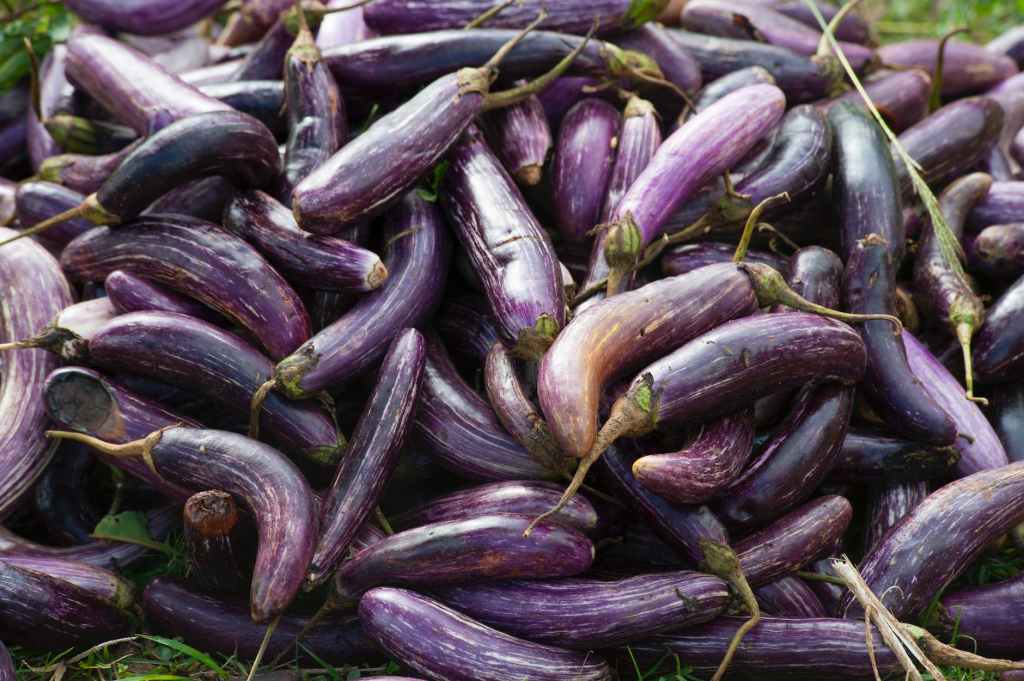
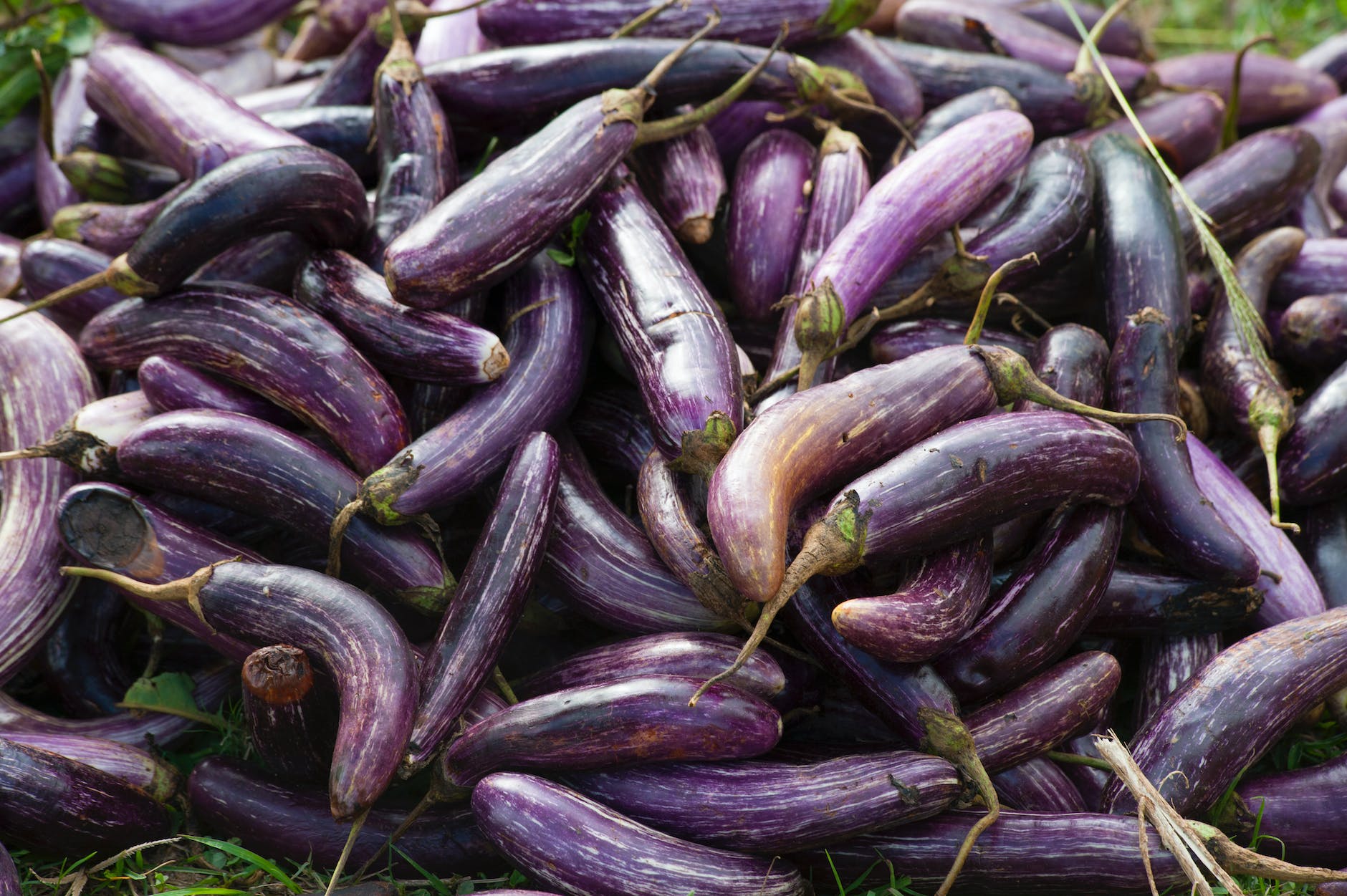
Eggplant can vary in size and shape from small and round like a baseball to long and skinny. They come in a variety of colors as well ranging from white to green, and red to purple. Some eggplant can weigh up to 5 pounds or be as small as 1/2-inch across. In most temperate climates, eggplant get to be about 2 feet tall, but if they are kept warm year-round they can grow to be 8 feet tall and live for up to 6 years.
Eggplant do best in sandy, well-draining, fertile soil that is rich with a pH around 6. To help avoid bacterial wilt and other diseases it is best to plant eggplant where there have not previously been any tomatoes, peppers, or eggplant. Using compost or manure that is well incorporated into the soil for eggplant is a good practice to help make the soil rich. It is best to start seeds indoors about 10 weeks before you plan to plant out, which will be March or April for most zones. Planting seeds in peat pots or in seed boxes with potting compost is best practice. Seeds should be planted 1/4 to 1/2 inch deep and will germinate best in temperatures between 75°F and 95°F, sprouting in 12 to 15 days. When seedlings are about 2 inches tall, they should be transplanted to rich soil in peat posts if possible.
Eggplant should be planted out under plastic at least 2 weeks after the last chance of frost because they are so sensitive to temperature and a late frost will kill the young seedlings. When planting eggplant out, typically in late May through July, plant them in an area protected from cold winds and space plants 18 to 30 inches apart with rows 2 to 3 feet apart. Be careful not to damage the roots while planting, and try to plant in an area where the roots will not be walked on as the plants will do better. Watering needs to be moderate, but not too much as eggplant thrive in dry climates. In fact, they will close up their pores like a cactus to preserve water. It is best to water no more than once a week to prevent the fruit from becoming watery and bland.
Container growing can be ideal for eggplant because it allows them to be brought in when cold or cool weather is eminent. Each plant will need a 12-inch pot with at least 3 gallons of soil 1 foot deep. When planting in a larger container plants should be spaced 18 inches apart. As a self-pollinator, eggplant can thrive indoors as they don’t need insects to pollinate and bear fruit. When growing eggplant, it is best to plant them in full sun where there is plenty of air movement and moist, fertile soil. The amount of fertilizer needed will depend on the soil, but nitrogen, phosphorus, and potassium are most important.
Eggplant are susceptible to several diseases and pests including molds and mildews, blights, wilts, flea beetles, aphids, hornworms, mites, and potato beetles. Molds and mildews can be prevented by planting fungus-resistant varieties, adequately spacing plants for airflow, planting in a sunny area, and keeping the environment from being too humid if the plants are indoors. Many blights and wilts can be prevented by planting in well-draining soil, not over water plants (especially from above), cleaning equipment properly, and rotating your plants. In the case of eggplant, do not plant where tomatoes, peppers, snap beans, potatoes, or eggplant have been in the last 3 years. Cutworms and flea beetles are more dangerous to young plants than mature plants. Cutworms can be stopped by placing a cardboard collar around the base of the eggplant when planting out. For flea beetles, physical barriers, mulching, and neem oil can be some of the best preventatives. For hornworms and Colorado potato beetles, they can be picked off by hand or sprayed with an organic spray like Bacillus thuringiensis. Spider mites can be taken care of using an insecticidal soap. To help control aphids, you can remove the foliage if only a few leaves are affected or if more of the plant is affected insecticidal soaps or oils like neem oil can be used.
Eggplant typically are ready for harvest in August or September and should be cut off of the plant with a sharp blade as the stems are tough and pulling can cause damage to the plant. The fruit can be picked as soon as it is shiny and the size of a large egg; however, if not picked the fruit will continue to grow. It is best to pick the fruit before they are over-mature when they will lose their glossy appearance and be longer than 8 inches. At this stage they will be bitter. Harvesting the fruit when it is young will also result in more fruit.
There are several options for using or preserving eggplant. Eggplant don’t keep well fresh off the vine, but if you are going to store eggplant this way, it is best to leave part of the stem on the fruit. To preserve eggplant, you can dry or freeze the fruit, but it does not can well. When drying eggplant, peel the fruit and slice 1/8 to 1/4 inch thick then steam blanch the slices for 4 minutes. Place a singled layer in the dehydrator or oven for 18 hours at 120°F. The slices are completely dried when they are dry and leathery all the way to the center of the slices. To use the dried eggplant, rehydrate the slices in water overnight before using it as you would fresh eggplant. When freezing eggplant, peel the fruit before slicing or dicing to desired size. Then steam blanch the pieces for 2 to 4 minutes. While the pieces are waiting to be steam blanched it is best to place them in a solution of 1 tablespoon lemon juice per 1 quart of water to help them keep their color. After the pieces are cool from the steam blanch they should be dipped into the lemon juice and water solution again before they are drained and frozen.
To prepare fresh eggplant, they can peeled or not peeled. If you are using store-bought eggplant and are not peeling them, be sure to wash them well as they have been sprayed many times. Typically white eggplant have a tender skin and are not peeled, but eaten skin and all. Some people like to salt the eggplant before using it in a recipe, no matter the recipe. If you chose to salt eggplant before using it, sprinkle sliced eggplant with salt, stack the slices and weigh them down, then wait 30 minutes. After 30 minutes, remove the excess liquid and proceed with the recipe.
Nutritionally, eggplant have only 20 calories per cup. They are relatively high in fiber, potassium, and antioxidants like vitamins A and C. Some studies are showing that eggplant might help to prevent cancer, reduce the risk of heart disease, and promote weight loss; however, additional studies are need to confirm these findings. Eggplant are high in polyphenols, a natural plant chemical that helps in the regulation of blood sugar and the body’s processing of sugar. Because of this, eggplant can be beneficial for those with diabetes.
While eggplant are not the most nutritious vegetable and can be difficult to grow due to their inability to handle cold temperatures or wet climates, they are beautiful in the garden and can be a great addition to many dishes in the kitchen. If you are wanting to grow eggplant, it can be a good idea to check with your local extension office or greenhouse to see which varieties will do best in your growing area.
 Cora's Cottage
Leave a comment